DIGI SOCIETY
As a young lad, my cousin brought home a desktop computer running MS-DOS that started with a floppy disk. This PC gave me my first introduction to spreadsheets through Lotus 1-2-3. At the time, I didn’t use the spreadsheet but was fascinated by all the different cells. About six years later, I studied accounting in London and had my first attempt at Excel. Floppy disks were standard, and aside from the many other courses I was taking, I mainly remembered training on my first accounting software, Sage Line 50. The software was desktop-based and an on-premises enterprise resource planning (ERP) solution.
I have been in the field of accounting for over fifteen years. Like many foreigners coming to Finland, I have diverted from my field but have been consistently back for the last four years. The changes in digitalisation in the field have been rapid and impactful. I recall my first time working in my field in London. Clients would drop off their receipts from the previous month at the start of each month, and we would review these receipts, allocate them to the correct account, and post them in QuickBooks. Needless to say, we had files upon files of clients’ records stored in binders. At the time, an accounting firm with two desktop PCs and a desktop version of QuickBooks was considered well above average. This accounting firm specializes in serving small to medium-sized companies. Back then, financial reporting and accounting were primarily focused on recording transactions and preparing financial statements.
By the late 2000s, digitalisation progressed noticeably with the arrival of cloud computing. I can clearly remember working with my first ERP tool, “Valueframe,” which had ERP functionalities. It was amazing working seamlessly with many people from the organisation I had never met to this day. My first experience of electronic billing followed right after sending credit notes electronically. I had my own desk in my manager’s office, and work started between 8:30 and 9:00 a.m. I took note of the flexibility being introduced as it related to closing the work shift. I was accustomed to my boss dismissing me for the day. Looking back now, it was a combination of changes occurring in the global workforce, particularly within Europe. However, as I had just moved to Finland, I initially attributed it all to a change in culture.
I took a few years’ break from the accounting field. On my return, the changes in the field were vast. Many new roles emerged due to digitalization, as there was significantly more data to be analyzed. The information we gleaned from the accounting and reporting was now granular to understand all sectors of the business, facilitating efficiency and maximizing profits. Roles such as Business Analyst and Financial Analyst were established. In the office, there were no designated seats; you simply brought your laptop, occupied a vacant table, and plugged your device into the monitors.
The setup at this time was multifaceted; we used about six different applications, which were all interconnected in some way, and tracing the principles of accounting in the web was almost impossible. I felt accounting, as we had learnt it in school, was dead then. Many people contributed to the development of the final product. But it was not just about producing the financial statements. A team of twenty people handled the record-to-reporting of the largest electricity supplier in Finland.
As a result of digitalization fast-tracked by COVID-19, working remotely has become the norm. We heard of seamless meetings being held remotely, and tools like Zoom and Microsoft Teams enabled work to be done from practically anywhere in the world, provided an internet connection was available. Training and inductions were done remotely.
As I changed jobs, remote work took on an even different shape, as I was part of a team where two of the seven members worked from Poland, and team members saw each other just once a month at our monthly finance meetings. My workplace had its own AI chat, and the financial tools used facilitated smooth communication across our property management and ERP software, Haltia, as well as our outsourced Accountants, Azets. Allowing us to manage some of the most popular shopping centers, offices, and retail parks for our clients.
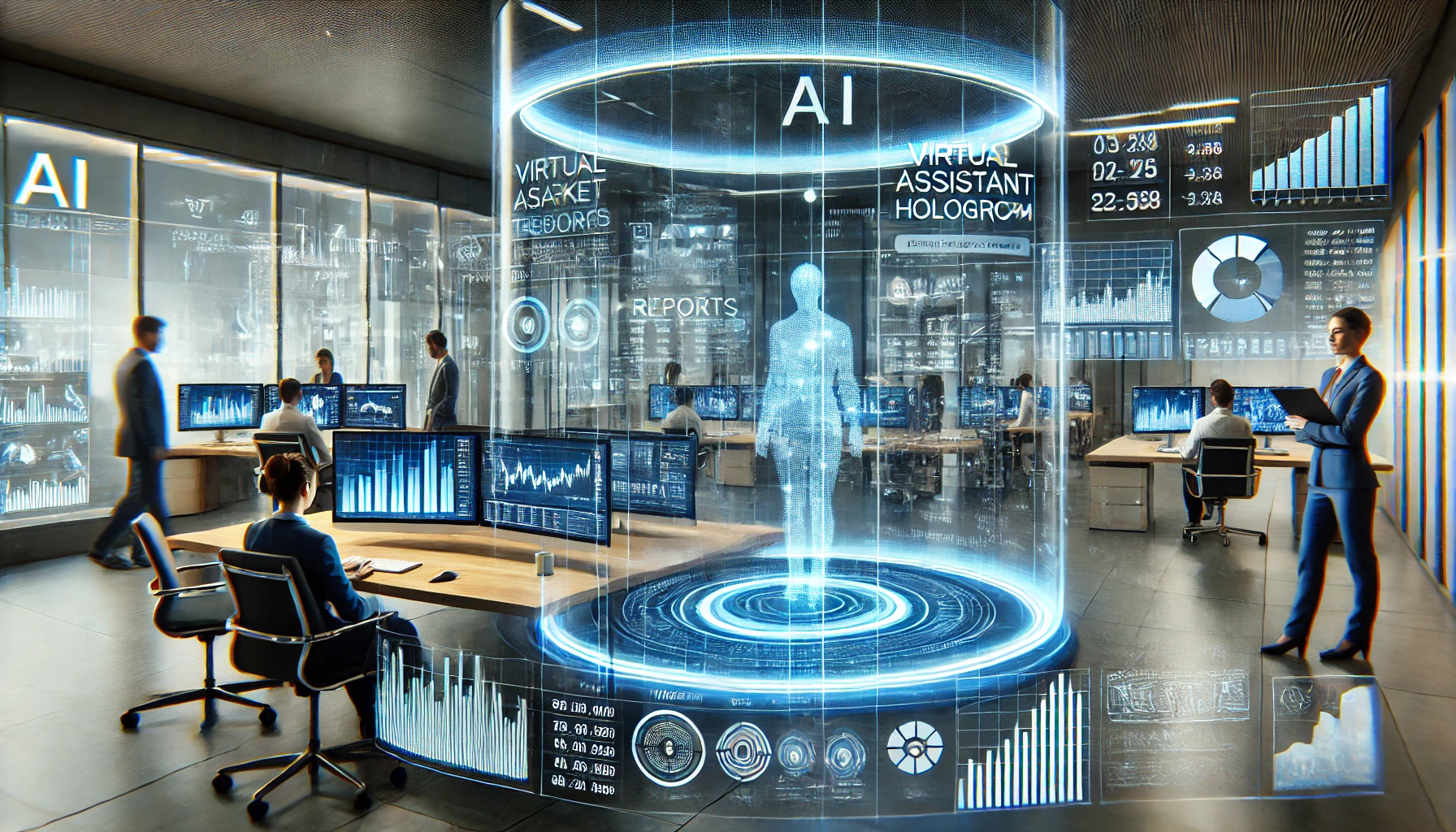
I currently work as a Financial Assistant for an AI company, and I am fully remote, allowing me to live outside of Finland while still retaining my job. Google Sheets has replaced Excel as the go-to financial tool, offering real-time access to all files. Gemini, Google’s AI assistant, can locate emails, files, and summarize data, as well as assist with various other tasks.
Future of Digitalisation in Finance
From current trends, I envision the future of Finance, where financial models can be updated with the click of a button. There will be a reduction in manual input in the process, as purchase orders are sent to the ERP systems, which will be able to read them and create the invoice accordingly. Reminders and collection would be completely automated. All sales would be automatically recorded in their respective accounts. Incoming purchases and receipts for reimbursements would be sent directly to the ERP, and all postings will be automatically done, eliminating the need for an accountant except to oversee the process. Given the smooth accounting setup, one would expect analytics done by AI, as well as Budgeting that is automated with enhanced accuracy and speed. The month-end closes would be completed with the press of a button, requiring minimal manual input. Financial presentations, as well as dashboards and models, would be fully automated.
Open Digital Society
An open digital society can offer benefits such as transparency, innovation, and improved access to services. However, while the benefits are high, the risks may also be higher, as it increases the likelihood of cyber threats, risks to data privacy, and the potential for data misuse. From my perspective, as someone working in finance and managing sensitive data, including payroll information, invoicing, and financial reports, the General Data Protection Regulation (GDPR) has strongly guided my professional use of data and made me aware of how my personal data is used and can be used. I am also aware of my rights as the subject and what the data controller and processor can and cannot do with my data. I have used my right to have my personal data deleted from companies, and I expect companies to inform me how my data is used
At work, I am careful of the method I use to share confidential information. I have adopted stricter data governance practices, such as outlined policies for data access, storage, and deletion. The systems I use at work, such as Netvisor and Clockify, have essential features for safe data handling. These features are GDPR compliant, an example of these is audit logs and permission controls
Risks of an open digital society
Financial and personal data have the potential to be used outside of their intended purpose without the consent of the data owner. The data subject may find it challenging to track the numerous parties that handle their data. Financial institutions and businesses face the risk of a cyber attack if data is not adequately stored
Positive effects of GDPR
GDPR has made businesses more responsible for how they handle data, most importantly, ensuring that data is more secure. On the other hand, subjects are more aware of their right to access, correct, or delete. GDPR has improved trust, as clients and employees feel safer knowing their information is handled in a legally compliant manner.
Negative Effects of GDPR
The requirements of GDPR place an administrative strain on businesses to ensure they meet GDPR compliance. The resource is also consumed by studying and understanding the legal language of the GDPR.
Chat GPT.
I personally use ChatGPT on a daily basis while working. Troubleshooting and creating complex formulas in Google Sheets, workarounds in Netvisor, brushing up on legal accounting matters to ensure compliance, and understanding VAT regulations in Finland. I have a monthly subscription. From my experience with the service, I can say that it is almost always accurate; however, knowledge of the field is crucial in identifying when the information is inaccurate. Additionally, it is essential to consider the prompts provided to the AI. I normally would ask the AI to, for example, act as an auditor, or as an accountant, or a lawyer, depending on the question and the field the subject belongs to. ChatGPT saves me time, as I no longer need to search the internet, as the AI does that for me and even provides a link for reference if requested.
When working with AI on a daily basis, I am highly aware of the data I feed into the AI, as I handle very sensitive information. I am also aware that the AI has built a profile of me based on my interactions. Some tasks seem too complex for the AI, even though the AI understands the task; the complexity of the requests poses a challenge. e.g., Can you act as a CEO specializing in Excel and Financial models, and create a template for a financial model that can auto-update from uploaded profit and balance sheet data? Please use Mapping to create a link between the accounts in the statements and the model. A request of this nature would not produce the desired results. In terms of factual information available on the internet, ChatGPT would perform well, even in analyzing and summarizing data. ChatGPT falls short when it has to produce a final product, such as a template, image, or video.
Self Evaluation
Exploring the material for this section has broadened my understanding of how Technology, data, and innovation are reshaping the world we live in. I took away the importance of data quality over quantity. The task was a very reflective experience for me. Technology has indeed come a long way. I was familiar with the EU’s GDPR and ChatGPT. All in all my takeaway is our critical need for privacy in digital communication, and quality data is key to accurate reporting as a finance professional who relies heavily on financial data to tell the story.
I have commented on Davide and Katja’s blogs