
My current job and use of different digital tools
In my role as an employment advisor, I support job seekers in finding work, improving their job seeking skills, and navigating the site Työmarkkinatori.fi.. My work involves assessing clients’ skills and situations, need for various services. My role is to help them create a structured and realistic long term employment plan, and guiding them toward suitable jobs, training, or other opportunities. I also ensure that clients understand their responsibilities and legal rights related to unemployment benefits and stay on track with their agreed employment plans.
Digital tools play an important role in my daily work. I use Työmarkkinatori.fi as the main platform for managing client information and records, tracking employment plans, and communicating within the Employment Services network. For continuous learning, I use YouTube and webinars provided by KEHA as well as Helsinki City organisation to stay updated on topics such as social security and labour market policies and legislation. I can study via our Intranet and it keeps my learning records in place. I also use Microsoft Teams daily to collaborate and network with colleagues, share knowledge on daily basis, and participate in professional discussions regarding decisions on services and finding information. I do follow news and events on LinkedIn, but I don’t personally use it to publish anything work related. I often guide my clients to find out about services in Etusivu | Työllisyyspalveluiden Palvelumanuaali there one can learn about many things relating to job seeking, participating in training workshops or language courses. This site can be used in Finnish, Swedish or English languages.
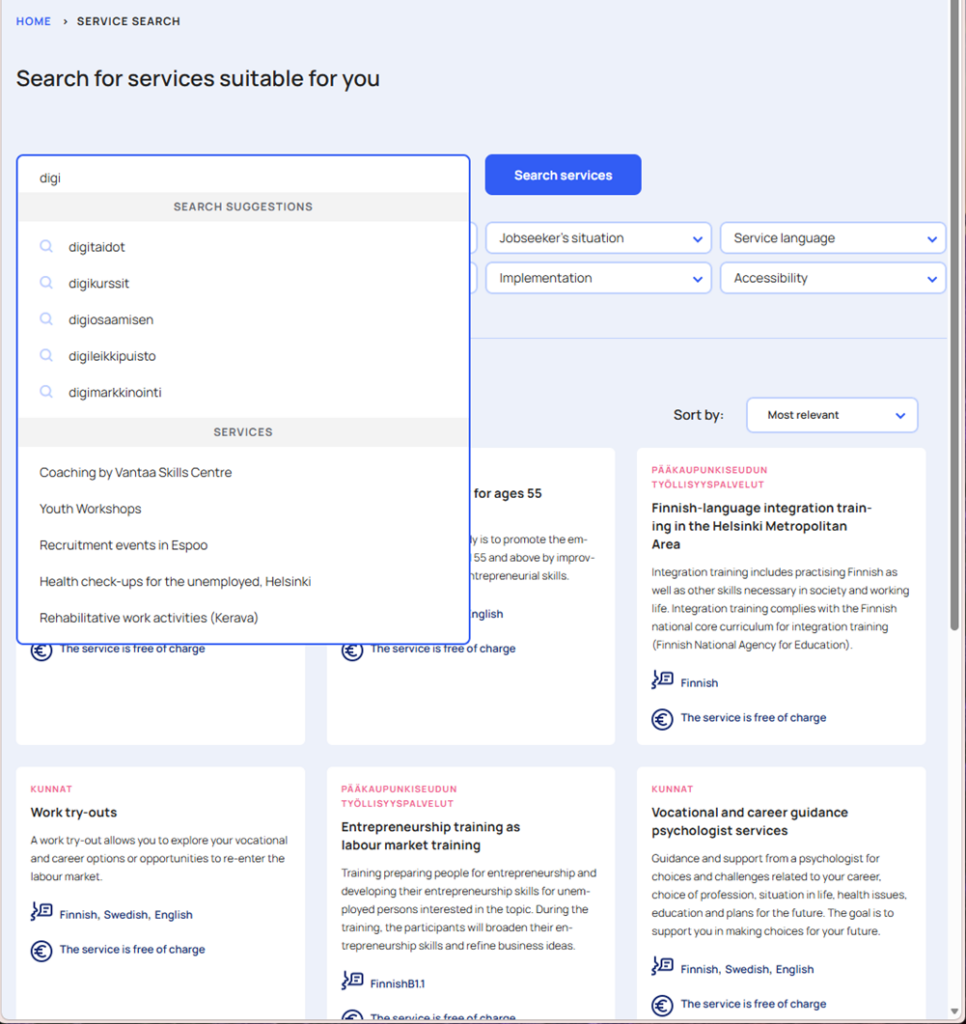
Due to the nature of my role as a public officer, I am not able to use social media such as Facebook, Instagram or TikTok in my work as such. This is important for maintaining professionalism, confidentiality, and data protection. Instead, I rely on official and secure channels to communicate and perform my duties responsibly. My work combines guidance, administrative responsibilities, and continuous learning, supported by a range of digital tools that help me serve clients effectively. I do use educational sites such as Wilma to register my clients on courses. Opintopolku.fi is often used to guide career thoughts and educational opportunities, and to check availability of application times.
Also I use YTJ Company and organisation search at ytj.fi as well as organisation registry Etusivu – Yhdistysrekisterin tietopalvelu to search and find information on various registered organisations. These organisations have a great role in taking in people for work trials, it is not a paid position or a contract, but it can offer a great opportunity to try-out a job in a safe way. The organisation has some requirements especially if they seek financial support for taking in an unemployed person as a contracted worker. This arrangement has benefits for the job seeker and the organisation, as they may get up to 100% of the salary costs paid to them by the City of Helsinki. These applications for any financial aid are done by the organisation’s representative and their information is public and it can be retrieved from the above mentioned registries.
In my role as an employment advisor, I also follow the activities of third sector social and mental health organisations that concentrate also in e.g. substance use rehabilitation to better support my clients. This includes regularly checking their websites, event calendars, and announcements to stay informed about available services, workshops, and community activities. Many third sector organisations offer valuable support such as job coaching, integration services, language practice, and low-threshold activities that can help clients improve their skills and well-being. Many of them offer AA-meetings, lunch meetings, music lessons or Joga-classes, often free of charge.
By keeping up with their events and programs, I am able to guide clients toward relevant opportunities that match their needs and situations. This cooperation helps expand the range of support beyond official employment services and provides clients with more practical and social pathways toward employment or to be part of society.
Overall, following third sector pages, calendars, and events is an important part of my work, as it allows me to connect clients with additional resources and strengthen their chances of successful integration into working life and society.
As discussed in Digi Society page, the most important part of my work with digital tools and environments is to ensure that all my clients have a way towards digital learning and use of digital environments. I must steer them away from the path to digital exclusion.
Sometimes it means that I must teach them ad hoc something such as using a smart phone, or simply how to write an email. Luckily, many of our Helsinki City and many other organisations provide our clients with workshops, courses and individual coaching on the digital tools and environments.
a brief self evaluation
In this task on digital environments, I learned how to describe and reflect on the different digital tools and platforms I use in my work as an employment advisor.
I was able to identify key systems such as Työmarkkinatori.fi, as well as other tools like webinars, YouTube, and Microsoft Teams, and explain their role in supporting both my daily tasks and professional development.
I think I succeeded in showing how digital environments are an essential part of modern employment services. I highlighted how these tools help with communication, information sharing, networking, and continuous learning, my own as well as my clients’.
I also addressed the limitations related to my role, such as not being able to use social media due to confidentiality and professional responsibilities, which demonstrates my understanding of ethical and legal considerations to do with GDPR and client data secrecy in general.
One area I could improve is providing more concrete examples of how I use these tools in specific situations with clients. This would make my reflection more practical and detailed. I could further develop my critical thinking by evaluating the strengths and weaknesses of each digital platform more deeply.
Overall, this task helped me better understand the importance of digital environments in my work and how they support effective service delivery. It also made me reflect on my own skills and areas for development in using digital tools professionally.