Digitalization and Me
Digitalization is not only what I study and observe—it’s what I experience on a daily basis. Being a full-stack developer, I’ve been lucky enough to witness digital transformation firsthand in different sectors: railway, automotive, AI, energy, and fintech. All of these industries have been transformed digitally to a huge extent, and I’ve witnessed the excitement as well as the difficulties that come with it.
In fintech, where I work nowadays, digitalisation is the center of the operation. Moneymingling has revolutionized how people manage their finances dramatically, AI-driven automation, blockchain, and online banking totally transforming finance. Even customer care, something routine, is being supplemented by AI chatbots today. While the innovations are making banking simpler and secure, it also highlights enforcing more stringent data privacy laws (hello GDPR!) and tightened cybersecurity.
The Future: AI, Automation, and a Universal Basic Income?
One of the biggest shifts we’re going through is the unexpected acceleration of AI and automation. I genuinely believe that we’re at the threshold of a world where many jobs will become redundant or will require significantly fewer people. That’s precisely why Elon Musk’s idea of a universal basic income (UBI) fascinates me so much. Think about it—industries are automating faster than ever, and even the new jobs created (like prompt engineers) don’t necessarily make up for the ones being lost. Now, with humanoid robots like Tesla’s Optimus in development, we’re heading toward a future where manual labor might become obsolete, leaving artisanal work as one of the few human-centric fields left.
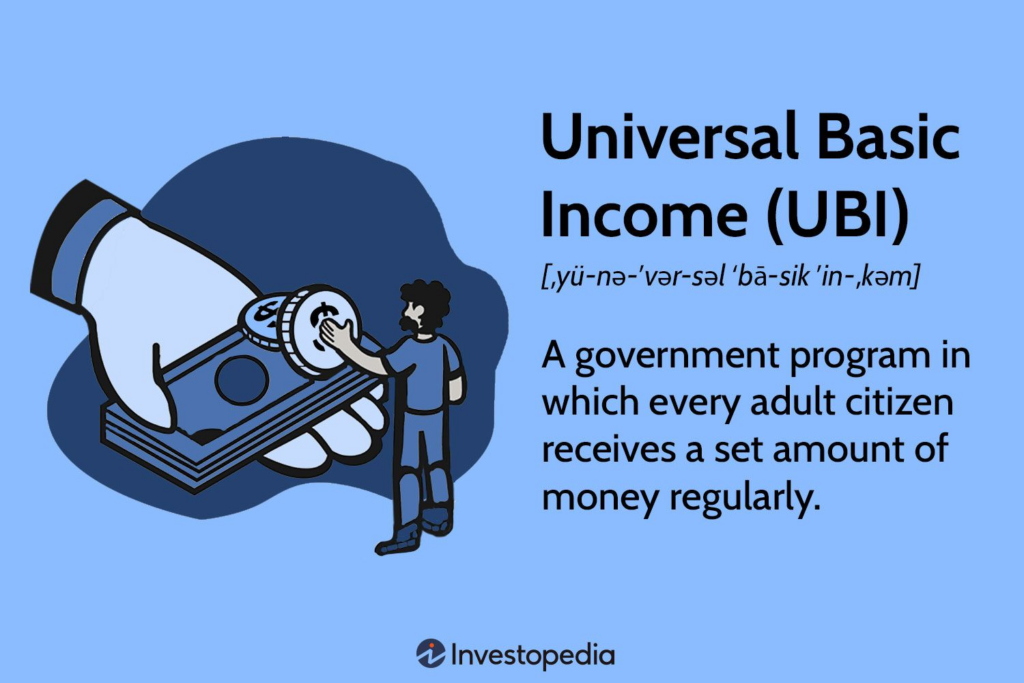
It’s a divisive topic, but it is hard to deny that AI already is replacing work. Others would say that AI will take as much away as it provides in return, but my own position is the amount of displacement will eventually compel some kind of societal realignment, which would be accompanied by discussions of new economic models like UBI.
The Data Tsunami: Can We Even Keep Up?
Every day, we generate petabytes of data, and the amount is humanly unassimilable. This is where machine learning and AI come in and enable us to derive insights out of this torrent of unassimilable data. Even AI, though, has its limits when dealing with classical computing. Quantum computing, though still to achieve full development, might well be the means to processing such vast collections of data, not yet possibly conceivable to us. If quantum computing reaches its full potential, we could see changes redefinition not just of industries, but society and even the development of our own species.
The GDPR Balancing Act: Protection vs. Innovation
I have a fifty-fifty experience with GDPR. I first employed it when working on my master’s thesis when I tested EEG to build a lie-detecting machine (spoiler: it didn’t work, or else I’d be a millionaire!). I had to make sure participants’ own information was handled securely and in line with GDPR regulations. Nowadays, as a banking professional, I perceive GDPR differently—it’s a key component of financial security and customer trust. A personal data breach would make the headlines and be extremely expensive.
While GDPR is necessary to protect individuals’ privacy, it also brings challenges for companies trying to innovate. Stricter regulations mean more bureaucracy, which can slow down development. Still, given the number of cyber threats today, I’d rather have these regulations in place than risk uncontrolled data misuse.
My Relationship with AI: A Daily Companion
I interact with AI every day. Whether you’re ChatGPT (hi, you!), GitHub Copilot, or another AI assistant, I use these tools on studying, ideation, summarizing research, and even coding. AI has actually made me much more productive, but it’s not without its flaws. Hallucinations (AI boldly stating incorrect information) do occur, and using AI to its greatest benefit requires expertise in your field. You need to be able to fact-check, edit questions, and be aware of the key concepts in order to draw meaningful conclusions.
Despite its flaws, I see AI as a wildly powerful tool and not a menace. Humans have distrusted technological advances before—automation, computers, the internet—but they’ve always found a way to adapt. The answer is to learn to use such tools and not attempt to suppress them.
Self-Evaluation: What I’ve Learned
After considering these matters, several things came to mind:
- AI and automation are advancing at unprecedented rates, and discussion of economic models like UBI is more and more in vogue.
- Quantum computing could be the next big thing in processing massive amounts of data.
- GDPR is a necessary but complex piece of legislation—it’s hard to find the right balance between security and innovation.
- AI is a wonderful tool if used correctly, but it requires knowledge, critical thinking, and continuous learning.
There’s always so much yet to find out, ranging from how quantum will evolve to the ethics of AI and data privacy. One thing for sure, though: digitalization has arrived and those who get on the ride will decide the future.
I really enjoyed reading your post — it was both technically deep and philosophically reflective. Your points about AI, automation, and UBI were thought-provoking, and I liked how you made space for the risks and benefits of each. The idea of humans adapting to every major technological leap really resonated with me. Your experience with GDPR from both academic and financial industry perspectives gave a nice contrast. And your view on AI as a companion — not a threat — felt empowering. Thanks for such a well-rounded and inspiring read!
P.S. I really enjoyed the visual layout of your blog – it made it so pleasant to read!
Hi Davide, excellent writing. Your layout and pictures gave some life to the blog. Your role appears to be quite interesting, particularly if you work in financial technology for a bank. It would have been great to hear more about the development of digitalisation from your work life.
I strongly agree with your views on Universal Basic Income, given the rapid pace of technological progress. Imagine being able to hire an AI employee, combine this with machine learning, and the compounding effect would be phenomenal. The end result would be that it would be counterproductive to have humans in some jobs.
Thank you for the well-written article.