
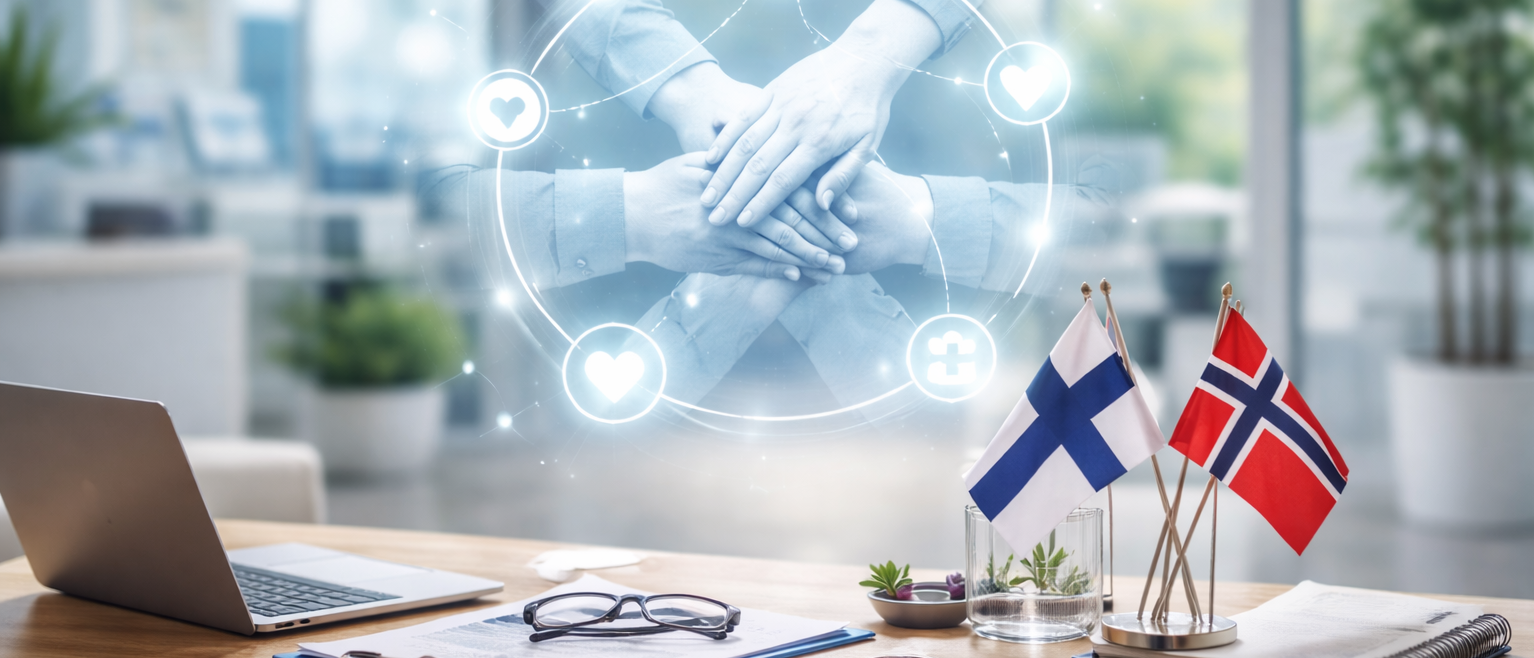
Digitalisation in Healthcare
In a digital society we are living in, technology shapes the aspect of our daily lives. Digitalisation affects how we communicate, how we work, and make decisions. It has transformed the role of professional, leadership, and relationships with patients particularly in health care. I have worked in healthcare in Finland and Norway, and I have seen how digital systems can both improve and complicate daily work in these two developed Nordic welfare countries.
In this essay, I reflect on my experiences of digitalisation in healthcare, evaluating the risks of an open digital society, examines the impact of GDPR, analyses the use of artificial intelligence such as ChatGPT in my field, and concludes with a self-evaluation of my learning process.

Digitalisation In my work
When I first started working in the health care field, we mostly had one patient information system that everyone shared. All the patient information was stored in the same location, making it easier to locate information and communicate better between departments.
With time in Finland, digital systems have been integrated in healthcare daily practice. For example, electronic health records and documentation platforms have been developed to support patient care. Digitalisation has been effective in improving patient safety and providing continuity of care. There is an increased administrative burden, and a lot of time spent on the computer. The system for structure sometimes reduces flexibility and direct patient interaction.
Nowadays, there are many healthcare systems that doesnt work well together. We even need to send patient information with a secure email to another welfare area for security. Which is time-consuming and carries a risk of error.
Why does each welfare area need its own system? Wouldn’t it be safer and more efficient if there was only one system for the whole country?
After relocating to Norway in 2023, I was not surprised that the digital systems were equally advanced, the culture surrounding them felt different. Nurses were trusted to make professional decisions while working within digital systems. There was support from technology rather than strict control. The leadership in Norway also encouraged dialogue and shared decision-making. This showed me that digitalisation is about technical systems, leadership, and trust. Another factor that contributes to the development of digital society is big data and connected devices. In the Nordic healthcare system, for instance, big data is used to analyze health information to ensure the improvement of health outcomes.
The Internet of Things, on the other hand, offers the possibility for remote patient monitoring. There are prospects for the development of telehealth, especially for people living in remote areas such as Norway. In the future, artificial intelligence can be applied for diagnostic purposes, and robots can assist with routine tasks. However, the human factor must always remain at the center of healthcare, as empathy and ethics must always play a role.
Risks of an Open Digital Society
An open digital society also creates vulnerabilities. Healthcare organisations store highly sensitive personal data, which makes them target cyberattacks. Data breaches, ransomware, and phishing are real risks. If systems fail, patient safety may be compromised.
This has increased my awareness of digital responsibility. Protecting passwords, handling email carefully, and respecting confidentiality are essential professional duties. Cybersecurity is not only a technical issue but also an ethical one. Without trust in digital systems, confidence in healthcare may decline.
GDPR and Data Protection
The General Data Protection Regulation, which has been in effect in the EU and EEA countries since 2018, is a regulation that has had a major impact on the healthcare sector of Finland and Norway. This regulation has enhanced the rights of patients and ensured that the handling of patient information is responsible. This has given patients control over their information, and the use of information is justified.
In my professional life, the General Data Protection Regulation has made people more aware of the importance of confidentiality and transparency. This regulation has helped build trust and clear responsibility. This regulation, although considered to be a bit bureaucratic at times, is of great importance in the maintenance of patient privacy in the digital world.
Artificial Intelligence and ChatGPT
The use of artificial intelligence is becoming more common in the world of work. I decided to use ChatGPT to answer my questions about leadership in nursing and patient safety. While the responses were clear and informative, they were also useful. In my experience, artificial intelligence is good for learning, summarizing, and writing.
The responses were not always specific and contextual. Artificial intelligence does not always understand the complexity of emotions, context, and ethical issues in patient safety. It can also give information with confidence but without full context. In my experience, artificial intelligence is good to use but should not replace a person. Human responsibility and ethics are key.
Self-Evaluation and Learning
I have learned that digitalization extends beyond technical aspects to cover leadership, autonomy, ethics, communication, and professional identities. I have gained a better understanding of the impacts of cybersecurity risks, the significance of GDPR, and the potentialities and limitations of artificial intelligence.
At the same time, I understand that I still require more knowledge about the regulation of artificial intelligence, sophisticated cybersecurity practices, and ethical aspects of big data in health care. Such learning is vital in a dynamic digital society.
Conclusion: Keeping Healthcare Human
Finland and Norway have highly digitalised healthcare systems, based on trust and equality. My experience indicates that the level of care is not based on the level of digitalisation but it is based on the leadership culture and the level of professionalism.
The future of health care will be digitalised, but the quality of health care will always depend on empathy, ethics, and collaboration. Humanity will always be at the heart of health care, regardless of the technology available.
The blogs I commented on: