KELA
I have familiarized myself with the services provided by Kela, the Social Insurance Institution of Finland. At the moment, I do not receive any benefits from Kela, nor do I actively use its services. However, in the past, I have used Kela’s support services during my studies. I received student financial aid as well as housing allowance when I was younger and living on my own while studying.
Although I am not currently using Kela’s benefits, I do have a valid European Health Insurance Card (EHIC), which is one of the services Kela provides. Since I travel frequently, the card is an important document to have. It is renewed automatically every two years and is sent directly to my home address without me needing to request it.
I have only needed to use the EHIC once so far, during a trip abroad when I had to be hospitalized. That was the only time I’ve had to rely on the card, but in that situation, it was extremely helpful and ensured I received the necessary medical care without any major complications. I find it reassuring to know that I have access to essential health services while traveling in Europe thanks to this card.
OmaKanta
I accessed my personal health care data through the OmaKanta service by logging in with my online banking credentials. The login process is smooth, safe, and familiar, as it uses the same secure identification methods as many other official Finnish services.
In my opinion, using OmaKanta is very straightforward. The platform is clearly structured with intuitive headings and categories, which makes it easy to find the information I need. I have used OmaKanta to check my prescriptions, read doctor’s notes from past appointments, and review vaccination records. I’ve also been able to see laboratory results and referrals made by healthcare professionals.
I find OmaKanta to be a very useful and reliable tool for staying informed about my own health. It’s convenient to have all important medical data collected in one place, and the fact that it’s available online at any time makes it easy to stay up to date. I appreciate the transparency and accessibility that OmaKanta offers—it helps me feel more in control of my own health and medical care.
Keva
I logged into the Keva website to check my pension estimate and see how much I would receive if I retired at the age of 63 or 68. However, there was no information available about my pension on the site. Even though I couldn’t view my pension details, I found the Keva website easy to navigate. I plan to check again later or contact customer service if the information does not appear in the future. It’s important to be aware of future pension prospects, and I think tools like this are useful once they contain the correct data.
Digital Shops
I visited the websites of Amazon and Trivago to compare prices and evaluate the quality of information provided to consumers. On Amazon, I looked at the prices of electronics and everyday products. I noticed that some items were cheaper than in local Finnish stores, but others were either similarly priced or even more expensive when shipping costs were included. The product descriptions on Amazon are usually detailed, with specifications, customer reviews, and ratings, which help consumers make informed decisions. Overall, I find Amazon to be a reliable service, especially when products are sold and shipped by Amazon itself.
On Trivago, I searched for hotel prices in a few European cities. Trivago compares prices from different booking platforms, and in many cases, the deals were better than what I’ve seen in local travel agencies. The site gives a good overview of available options, with filters and reviews to help find the best match. However, it’s important to double-check the booking terms and conditions on the actual site that handles the reservation.
Both services offer useful tools for comparing prices and reading user reviews, which supports transparency. As long as the buyer pays attention to details and checks seller ratings or booking policies, both Amazon and Trivago can be considered reliable and convenient platforms.
Finnish Institute of Occupational Health
I explored the website of the Finnish Institute of Occupational Health (Työterveyslaitos): https://www.ttl.fi. I chose this service because I work in the field of occupational health, and the institute plays an important role in providing up-to-date guidelines, research, and recommendations related to my work.
Työterveyslaitos offers a wide range of useful information about workplace safety, employee well-being, occupational diseases, ergonomics, mental health, and more. The content is reliable and based on scientific research, which makes it a trustworthy source in my daily professional tasks.
However, in my experience, the website could be clearer in terms of structure and navigation. While there is a lot of valuable content, I sometimes find it difficult to locate specific information quickly. The search function helps, but it could be improved for a better user experience.
Despite these small challenges, I regularly use Työterveyslaitos as a reference in my work. It supports occupational health professionals by providing practical tools and current knowledge for promoting health and safety in the workplace.
Digitalization and digital gap
One of the main concerns I have regarding digitalization is the impact it has on elderly people. Almost all services today have become digital, from banking and healthcare to booking appointments and accessing government support. This creates a significant challenge for older individuals who may not be familiar with technology or comfortable using digital devices.
Many elderly people may struggle with logging in to online services, understanding digital forms, or navigating constantly changing interfaces. Even when they learn how to use a particular platform, it might soon be updated or redesigned, requiring them to learn it all over again. This can be frustrating and discouraging.
The digital gap can lead to social exclusion, decreased independence, and difficulty accessing essential services. It may also increase the risk of misunderstandings or mistakes, especially in areas like healthcare or financial management.
To reduce these risks, it’s important that we provide support, education, and alternative service options for those who cannot or do not want to use digital tools. Everyone should have equal access to services, regardless of their digital skills.
Digital Competence Test
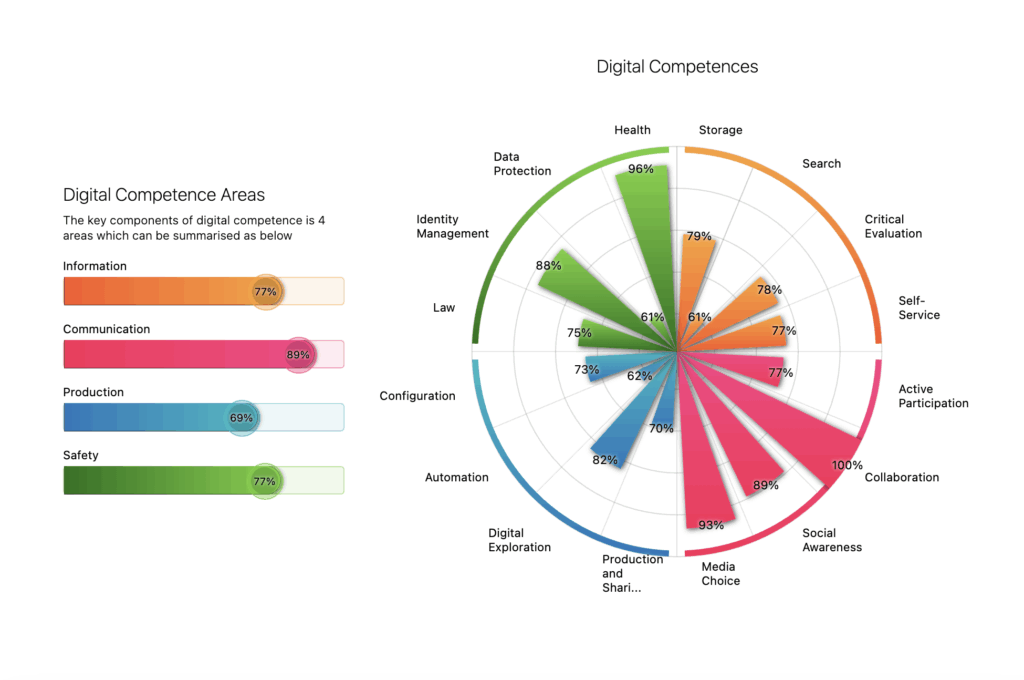
Self-reflection
Through these tasks, I have gained a deeper understanding of various Finnish and international services and their significance in my daily life. Regarding Kela services, I learned how important it is to be aware of the benefits and support available, even though I am not currently receiving any. I also gained practical insight into how the European Health Insurance Card (EHIC) works and how invaluable it can be in emergencies abroad.
Using the OmaKanta service provided me with valuable knowledge about digital health management. I found that a clear user interface and secure login make it easier to monitor personal health data, which increases my sense of control over my own health. Having access to occupational health records and medical notes in one place is a major advantage.
Exploring Keva services highlighted the importance of keeping track of my financial future, even though I was unable to view my pension details at this time. This motivates me to follow up on this regularly going forward.
Comparing online stores like Amazon and Trivago taught me important consumer insights such as price comparison, the impact of shipping costs, and the significance of customer reviews. I realized that online shopping carries its own risks but also many benefits when the user knows how to use the platform’s tools effectively.
Familiarizing myself with the Finnish Institute of Occupational Health website enhanced my professional knowledge and showed how research-based information supports practical work. However, I noticed that clear structure and easy navigation are essential for quickly finding needed information in digital services.
Finally, reflecting on the digital gap reminded me of the importance of considering all users, especially the elderly, when developing digital services. It is crucial to provide alternatives and support to ensure everyone can access services easily and equally.
Overall, I learned that digitalization offers great opportunities for simplifying everyday life and managing information but also demands digital skills from users and user-friendliness from services. Understanding this helps me both personally and professionally.
Blog posts I comment on: