DIGI SOCIETY
My thoughts on digitalization in the ICT sector…
I work in the ICT sector, and because of that, I believe I have had a front-row seat to observe how digitalization is progressing in Finland and shaping society. The arrival of smartphones on the market was a major change that greatly accelerated digitalization. The introduction of the 3G network was already a significant development, as it allowed phones to perform small tasks online. 4G created opportunities so that computers were no longer needed in everyday life. The development of phones and internet connections has led to a situation where practically everything can be handled with a phone, anywhere and anytime.
In my field, digitalization is visible in many ways. We develop, produce, and maintain digital services for customers and ourselves of course. We enable customers to access and connect to digital services and use digital services in our work in the form of numerous systems, applications and services.
Digitalization brings both benefits and drawbacks in my field. It increases efficiency and eliminates the risk of human errors. On the other hand, it is not infallible. A machine or robot operates exactly as it is programmed to do. Even a small mistake (which is usually a human caused error in the code for example) can quickly lead to bigger problems than what one person could cause doing the same work. A machine or robot works more efficiently and also repeats mistakes more efficiently than a human can. Fixing such errors can result in significant financial losses or damage to reputation. Digitalization has taken away jobs from ICT field, but it has also created new ones. As artificial intelligence develops, it is evident that it is taking even more jobs, especially in customer service, as increasingly intelligent Bots handle customer interactions (and background tasks) sometimes so well that the customer does not even realize they are talking to a machine. Is this development a good thing? Of course, it makes operations more efficient and is cheaper than training new employees and maintaining and further training existing employees’ competence and paying salaries and indirect personnel costs. However, real people are still the end customers. Do they want help from a real person capable of empathy, or from a machine that may or may not understand, but in any case, is unlikely to be able to make decisions out of compassion or empathy on human level even in the future?
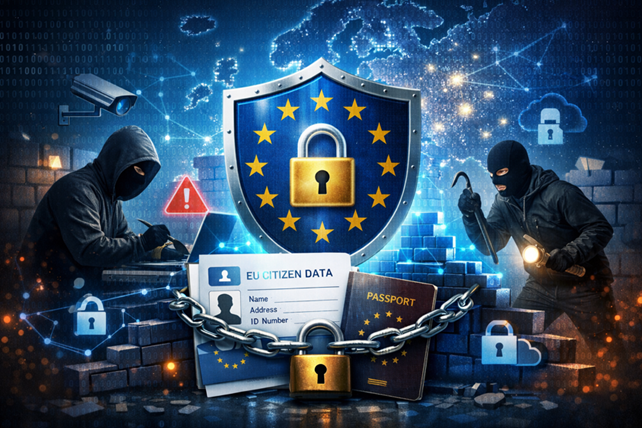
General Data Protection Regulation (GDPR): The necessary nuisance
Digitalization increases the risk of misuse of personal data and the possibility of it ending up in the wrong hands. People do not understand what information about themselves they are making available to the fascinating world of the internet and various applications. Companies often collect too much information about their customers and may not protect it at a sufficient level, or even at the level required by law. The systems and devices used to access this data are vulnerable, either due to errors within the system itself or user mistakes. Scams and malware make every incoming email and clicked link a risk, and human error combined with slightly outdated security can cause data leaks and breaches of customer privacy.
GDPR holds companies responsible for how customer data is collected, what information about customers is stored, where it is stored, to whom it is disclosed, and how long the data is retained. Additionally, customers have the right to know what information about them is found in the company’s records and to demand the removal of unnecessary data when there is no longer a legal requirement to keep it.
GDPR has provided citizens of the European Union with a much more secure digital existence compared to others, and, to some extent, even the possibility to opt out of the digital world. The data of EU citizens is protected, and this obligation applies to all companies operating within the EU. A violation of the General Data Protection Regulation can result in a fine of up to 20 million euros or four percent of global turnover. For example, the American (USA) company Google has received large fines for GDPR violations.
In my own work, the arrival of GDPR caused a major upheaval. I work in a large company with millions of customers in Finland and abroad. The entire staff had to be trained to understand GDPR regulations, specifically those related to our industry, and this expertise is maintained through annual certifications. All customer data systems had to be reviewed, and features added to enable the removal of unnecessary information, as well as the secure transfer of customer data when requested by the customer. GDPR protects consumers, and that is as it should be. However, it also creates work and expenses for companies. In my work, almost daily tasks have included removing unnecessary information from various systems at the request of customers and providing existing data, such as recorded conversations the customer has had with the company by phone or other channels. Digitalization will reduce this work as artificial intelligence increasingly handles, for example, the transcription of phone calls, and automation is able to compile the necessary information for customers from systems in an understandable form.
Discussion about the ICT sector with ChatGPT
ChatGPT can describe the ICT sector quite accurately, and according to its perspective, the ICT sector is the cornerstone of digitalization for the entire society. The outlook for the sector was also quite similar between ChatGPT and my own thoughts, and no actual incorrect information emerged in our discussion. The ICT sector will continue to grow and diversify will increase. Digitalization is not yet ready, but will keep evolving continuously. Expertise and knowledge in ICT sector becomes outdated quickly and requires professionals in the field to engage in constant learning and renewal. New technologies are constantly emerging. Artificial intelligence will change job roles as routines decrease, but the need for experts who can guide and utilize technology will increase. ChatGPT also agreed that the importance of cybersecurity is growing, as threats are increasing and there is a shortage of skilled professionals in the field.
Artificial intelligence will be a major and revolutionary part of the future. I believe it will greatly change society. It will make everyday life and working life easier, but it will also increase unemployment. Artificial intelligence is not without risks. Unfortunately, I have already noticed how people seek information from AI and believe it blindly, instead of searching for information from reliable sources. AI is created by humans, and one cannot assume that there are no influences behind it that guide its answers in one direction or another. I am deeply concerned that the increasing use of artificial intelligence in everyday life will reduce traditional human intelligence.
What I learned while writing the blog?
Because I work surrounded by digitalization, it sometimes feels like I am too close to see it clearly. Writing the blog gave me an opportunity to reconsider things from a different perspective. I had been thinking about changing fields for a long time. However, now I started to wonder whether a new career could actually be in the ICT sector, but perhaps in a completely new way. My impression that artificial intelligence will be the future was strengthened. Maybe my own career future could also be connected to it somehow. I feel I still need more information about the environmental impacts of digitalization and artificial intelligence, and I will need to study these topics more closely.
Related blog posts that I have commented on:
23/03/2026 at 10:40
It’s interesting to read about digitalization from a completely different perspective. Digitalization and artificial intelligence have had a significant impact on the development of the industry, and the future will certainly bring more major changes.