Digitization in laboratory field
I work in a laboratory in the health care sector. I qualified as a medical laboratory scientist ten years ago. I changed my job as a nurse to the laboratory world. A lot has happened in the laboratory field in the past ten years. Analytics and information systems have developed during my career accelerating analytical processes in the laboratory. Over the next ten years, the development of the laboratory field will probably be even faster.
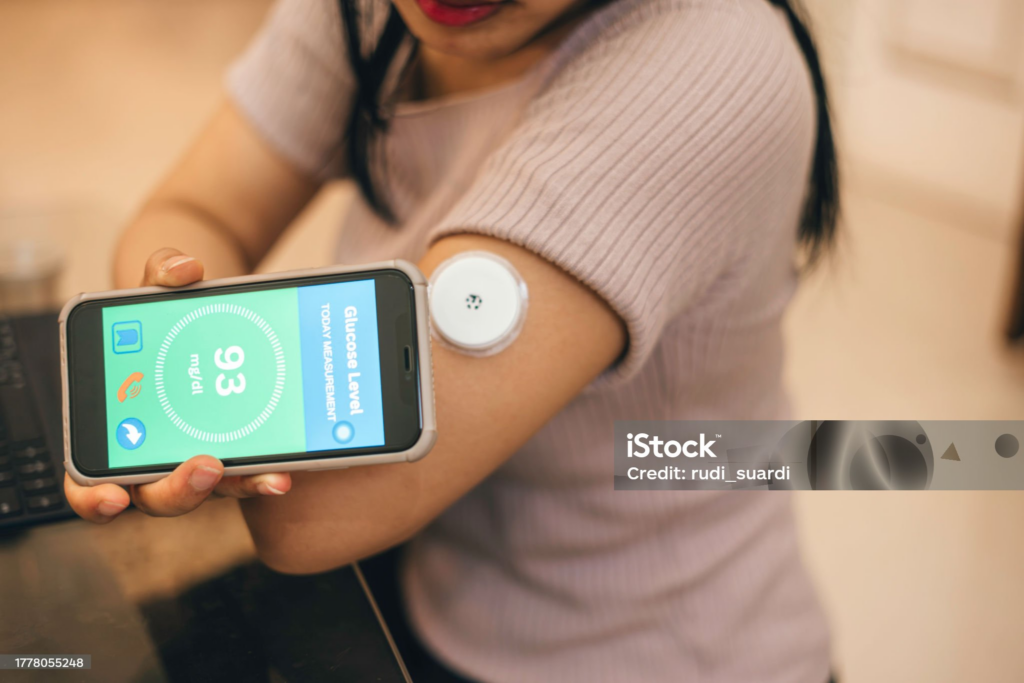
I think that in the future robotics will increase in my field so that blood cell identification is fully automated so that an ordinary laboratory worker no longer needs to look at a microscope. I also suspect that blood tests will decrease significantly in the future. I think that in the future patients will be monitored in hospitals with microchips so that blood analysts can be examined using a chip. I believe that in the future the laboratory will be the custodian of different types of information. Robotics identifies and stores information and the laboratory is the place where information is stored. Laboratory workers are users and intermediaries of information.
Cukier (2014) said that humans have a responsibility to use information in such a way that humans are the masters of information use and not the servant. Understanding the collected information is important because we can understand the world and our place in it better. I think that this is so true and important lesson to understand that we know how to use all the information that we get from different places so that we don´t forget humanity.
Technology is developing faster than we understand and its impact on humans must be recognized so that technology does not make us redundant. The power of information and technology is dangerous because it can change our everyday lives so that we are just passengers. Hopefully it will not come to that – that technology leads us. I would like to see all professions in our society when I´m old such as taxi drivers, store cashiers, cleaners and laboratory workers behind a microscope.
GDPR came to save us ?
GDPR was created to protect an individual’s personal data and it also provides rights to the individual. The rights include finding out what information is being collected about them, and it is possible for everyone to request access to their own information. The GDPR regulation obliges companies of all sizes to take responsibility for the processing of personal data regarding data documentation and personal data processing.
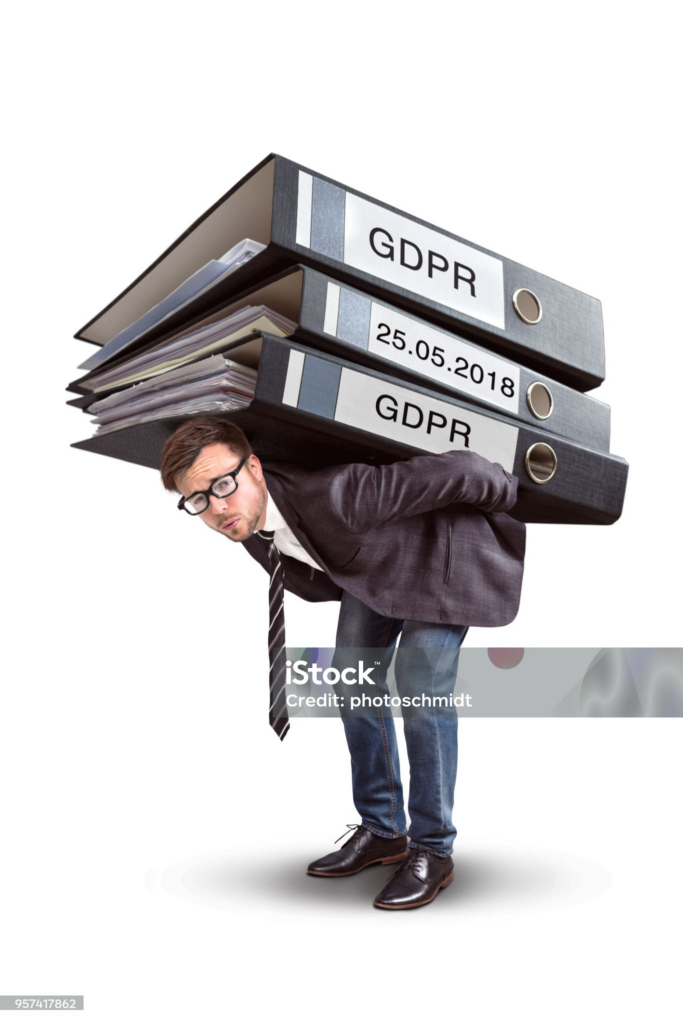
Above is a brief description of what the EU data protection regulation contains. If this regulation did not exist, the individual’s position in terms of data protection would be significantly weaker. Regulations and laws would not be needed if all people acted ethically correctly in the world. Among us there are always those who do not operate on an honest basis, especially on the internet. So we need laws and regulations in society so that the legal basis is preserved in terms of data protection. We are living in an era of technological revolution, and the advancement of technology requires new regulations alongside it in order to be able to protect the individual as information increases.
In my personal life, with the introduction of GDPR, I have noticed that I fill out more data protection forms than before. When I do business with a dentist or beautician, I notice that I am filling out a permit for storing my data. I am grateful that people have taken data protection matters seriously. I can’t say what negative data protection regulation could bring, other than more work for entrepreneurs in that they have to have things handled in accordance with the regulations, but that’s how it should have been in the first place?
Chat GPT gives wider perspective
I started YAMK studies two years ago and before this I had not used chat GPT. At first I downloaded the app out of curiosity and laughed at the use of artificial intelligence. One day I was writing an essay and I couldn’t move forward in my writing because the topic was hard to internalizes. I remembered that I have chat GPT on my phone. I wrote a question related to my essay and I got answer. Chat GPT offered many different perspectives on my essay topic. My eyes were opened to the use of artificial intelligence because it enables a broader view of things. My field of vision expanded in an instant when the artificial intelligence presented its view on the subject.
I only use chat GPT when my own thoughts no longer bring a new perspective on the subject. I want to challenge my own thinking, but artificial intelligence offers a continuation when my own thinking runs out.

On of the tasks was to ask chat GPT a question. I asked what kind of bacteria Staphylococcus aureus is. In response, I got the shape and characteristics and appearance of bacteria. The answer also told what kind of infections it can cause and the ways of infection. Medicines that affect the bacteria were also introduced. The answer also revealed the diagnostics used to identify the bacteria. The answer was good and very comprehensive and correct.
A possible problem with the answer is that too much information can cause to a non professional people too much knowledge. The possibility of misunderstanding the information is great and causes unnecessary stress. When using artificial intelligence, one must be responsible and question the information they receive.
Artificial intelligence offers a lot of good if you just remember to keep yourself alert and question what you read.
Self evaluation
I learned that I know very little about digitization. It was very meaningful to listen to the videos related to the course. Technology experts explained what digitization is in simply way. Listening to presentations about the future developments e.g. that car could not be stolen because the car seat does not recognize the occupant felt incredible! Human mind is incredible at inventing new things. On the one hand, it’s scary, and on the other hand, I’m looking forward to what I’ll still be able to see in my lifetime.
The world is changing and people are trying to keep up. I have to increase my knowledge of safe digital behavior. I have to think twice Do I really need to download material from the Internet or is it worth downloading something to the Internet myself because the information contained in the downloadable materials is also large. This part of the course brought new things to think about what we have ahead of us in the future.
Sources
Cukier, Kenneth 2014. Big data is better data. Video. YouTube- video service, published June. https://www.ted.com/talks/kenneth_cukier_big_data_is_better_data?subtitle=en. Referred 10.1.2025.
Comments I left
Anna´s site : https://blogi.savonia.fi/annalehtiniemi/digi-society/
Tiina Kokkonen: https://blogi.savonia.fi/tiinakokkonen2/digi-society/

Hello Inga!
I commented on your post because I noticed you work in a different sector than I do. When I was a child, I too dreamed of working in a hospital. I`m the financial sector myself.
In virtually every job, we are confronted with digitalisation. You believe that robotics technology will also com to the laboratory sector. I agree with you. Robotics technology will help us in many aras. This has already happened in the financial sector. I`m also about whether technology will eliminate existing jobs and increase unemployment. I am concerned about how crime will exploit artificial intelligence.
Good writing Inga and good luck to you!
Anu
Hi.
It’s interesting to hear about your experiences with ChatGPT, especially the question you raised. I work in a completely different field, in agriculture, and that particular bacterium is also relevant for us in cases of mastitis. What’s interesting is that AI only considers this type of question in relation to humans and didn’t provide a broader answer, such as mentioning that the bacterium can also be found in species other than humans.
Hi Inga!
It is interesting to read your reflection about the development of your field. I’m working as a radiographer. Often people see development only in their own field, so it’s nice to read about the development of your work as well.
Your English is really nice! Keep going!
– Siiri
Thank you for your post! I like your writing and design with pictures!
I see that you reflected on both the rapid development in the lab field and the bigger picture on digitalization of the society. The idea of the lab workers becoming more like information custodians is interesting and shows how much roles in healthcare are shifting with technology.
Your thoughts on AI are also relatable. I had similar experiences with ChatGPT and it’s amazing how it can offer fresh perspective when you feel stuck but you can’t trust it fully and it’s important to stay critical.
I also liked your take on GDPR. I agree that paperwork is a small price to pay for better protection of our personal data!
I think it’s fascinating how digitalisation has reached to all sectors, specially in the health system which proves to have been a game changer improving work efficiency immensely no just for staff but also for patiences particularly. In the other hand, it is true but also frustrating, that digitalising everything has been particularly difficult in the EU with the GDPR policies, impacting directly increasing the workload. However, probably with the mainstream use of AI that could be a game changer.
Hello!
Thank you for a very thoughtful and personal blog post. It was interesting to read how you have seen the laboratory field change over the past ten years and how you believe automation and microchip monitoring will shape its future. I especially liked the part where you highlighted the role of humans in managing and understanding information that technology should support us, not lead us.
I also found your reflections on GDPR important. You explained clearly how the regulation helps protect individuals and why it’s needed in today’s digital world. It’s true that not everyone acts ethically online, and your point about the necessity of laws is very realistic.
Your experience with ChatGPT was also relatable. I’ve had similar moments where AI helped me see things from a new ankle when I felt stuck. I agree with you that while AI offers a lot of useful information, it’s important to stay critical and not take everything at face value.
Thanks for sharing your thoughts!
Hi,
Your opinion is very interesting about decreasing need of bloodtests, that these could be replaced by microchips implanted in patients. This perspective also made me think about the future of laboratory research.
I agree that robotics will increase dramatically in the future, because workers are no longer available and their job description is indeed changing as you told in your blog.
As you writed that we are living in an area of technological revolution this quidance of GDPR is totally needed to give us safety. Data protection is difficult subject and requires more learning. Yes, chat GTP gives us more new perspectives but has to be evaluated very critically.
Finally your test was easy to read and the images brought life to the whole. Thank You.
Hi Inga,
Your post on Digi society was very eye opening! You work in a completely different field as me, and it is always interesting to learn what possibilities and risks lay in other professions, and how these might affect also us “others”.
It’s interesting to hear your thoughts on how robotics and automation could change the laboratory working completely. What really caught my eye was when you mentioned that you believe in the future it is possible that patients will be monitored through microchips. It is kind of a scary thought! As we learned from the videos from this course, there is already a lot of our personal data online, and a lot of ways to hack into systems. What scares me is the thought that if we were to have all our physical data in a chip that perhaps stores information online, would it be possible for someone to get to my physical health information without my concent? Now to think of it, of course this is already possible due to having patients’ information in digital health care systems (we all saw what happened with Vastaamo case back in 2018-2020). Just somehow the idea of having something implanted in me to transfer information live to a system, sounds scary. Almost as if I would not have the freedom to choose when and where I want to share personal information to. Or perhaps that would be possible. Who knows? On the other hand, I recognize that having microchips for that purpose would make it easier to spot changes in one’s health before it turns to something serious: catching cancer before it has spread widely or being able to affect cortisol levels before they get too high, for exmple. It would also have its benefits. What a controversial topic! Very interesting!
I think here comes the important part. Like you mentioned in your post, we need to be “masters of information use and not the servant”. We need to stay in control of how we use data. And GDPR is the first big step to help with that. As you said, more work perhaps, but despite of that we need to have things handled in accordance with the regulations, and that should be something that is self-evident from day 1.
To conclude, your reflections gave a lot to think about and I thank you for that! Great writing!
Hei
Mielenkiinnolla lueskelin kirjoitustasi ja sitä kokemustasi, kuinka Chat GPT oli avannut silmäsi tekoälylle ja mahdollistanut laajemman näkökulman asioille. Itsellänikin ensimmäiset kokeilut ja kokemukset ovat olleet hyvin vastaavanlaisia: kun omat ajatukset eivät ole enää tuottaneet uutta näkökulmaa, on tullut koitettua tekoälyä.
Vastaukset ovat olleet hyviäkin ja kattavia. Saatua tietoa tulee ajatella ja tarkastella kriittisesti, sekä kyseenalaistaa ja olla valppaana. Tekoäly tarjoaa usein tietoa paljon, jopa liikaa, enemmän kuin mitä olisi edes tarve. Mitenkähän tämä vaikuttaa stressikokemukseen? Niin, ja väärinymmärryksen mahdollisuuskin on olemassa.