
Introduction to Digitalization
Technology is now advancing at a pace never seen before.
I can still remember the first time I interacted with a computer. Back in the 90s, computer science was first studied on paper, and there was an acetate projector to show what software used to look like. After successfully understanding what a computer was, we were finally introduced to the “latest devices”. I guess these were probably some of the first interactions students had with computers, as their price was tremendously high; some of us had to wait for a couple of years to finally get one home.
Technology has gone far beyond that point and has changed our lifestyle, our work, our families, and everything we once knew about the world.
Moving forward to 2026, computers, tablets, and smartphones are basic devices commonly found in households. The world has been consistently moving in a direction where digital gadgets have been improving and simplifying (in most cases) our lives.
The tremendous amount of money invested in gadgets and digital devices has allowed society to integrate smart systems into everything possible. We have smart houses, smart lights, smart vehicles, and everything that could only be imagined in a science-fiction movie a decade ago. Though nothing is completely perfect, each stage of this new era brings resistance and its own new challenges.
Digitalization in my field
Digitalization has played a paramount role in my current field of expertise, but more importantly, in my side field, especially during the pandemic. After being involved in hospitality for about 10 years, I decided to take a break and become an English teacher. This move was made right before the pandemic. For this reason, I was able to observe how digitalization has transformed the hospitality industry, and how it triggered a massive change in the way people used to perceive education in the field. I would like to start with the hospitality industry.
Hotels and restaurants used to handle massive paper orders, procurement, payments, reservations, and internal communication, which used to be extremely complex, time-consuming, and required a lot of people. Orders often had to be updated due to communication delays.
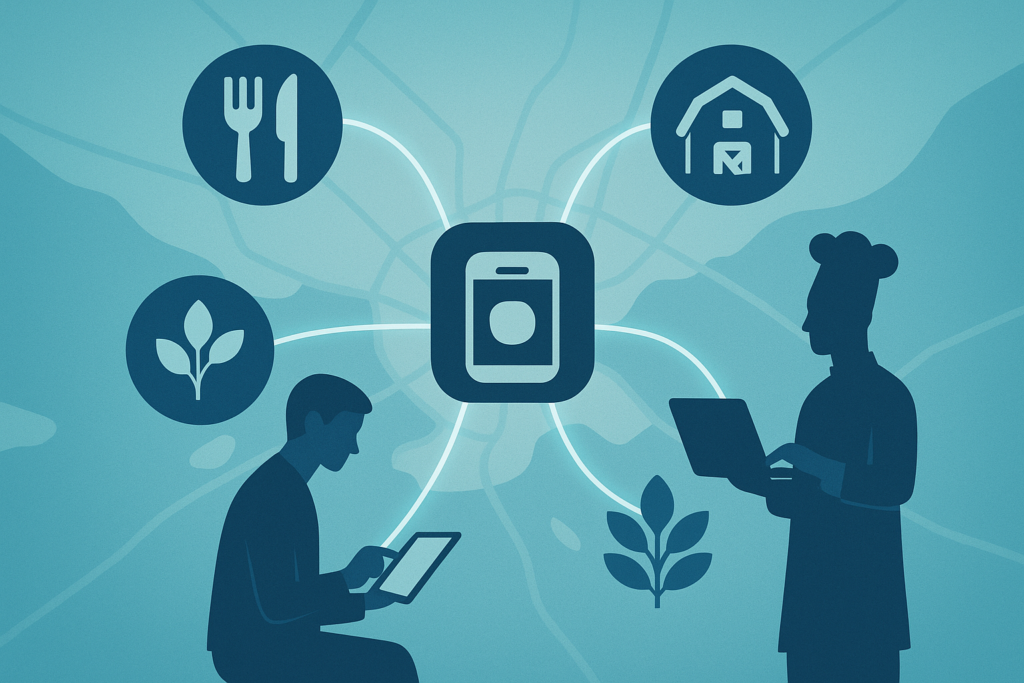
The digitalization of the industry has provided restaurants and hotels with state-of-the-art tools that facilitate operations, reduce costs, improve efficiency, and enhance productivity. Digital tools now enable the industry to have real-time updates of products and services, including the procurement process. Automation has simplified traditional workflows, transformed operational approaches, and allowed businesses to operate more efficiently while increasing revenue, providing a more sustainable source of income for employees.
The future looks even more optimistic. By the time this blog has been written, some hotels and restaurants have already incorporated, for example, automated ordering systems into their procurement departments. Using an application that allows for live tracking of the daily production and consumption, the program automatically sends a requisition order to the suppliers requesting the necessary supplies to continue with the daily operations. It is estimated that in the future, the system will not only be able to order what is needed, but also, using a sophisticated algorithm, it will be able to predict minimum and maximum stock levels based on historical movements, number of reservations, preferred items by each guest, and many others.
On the other hand, at some stage in my life, I was also involved in the education field. This experience lasted for about four years. Although this area is not my expertise, I was part of a total change in the field due to the impact of the pandemic on the traditional teaching methods.
Before the COVID-19 pandemic, classes were conducted face-to-face only, at least in the country where I was living at that time. During the initial phase of the pandemic, schools were totally closed, and social distancing and other restrictions limited the interaction options for the students and teachers. That was the moment when education was pushed to evolve into a digital format.
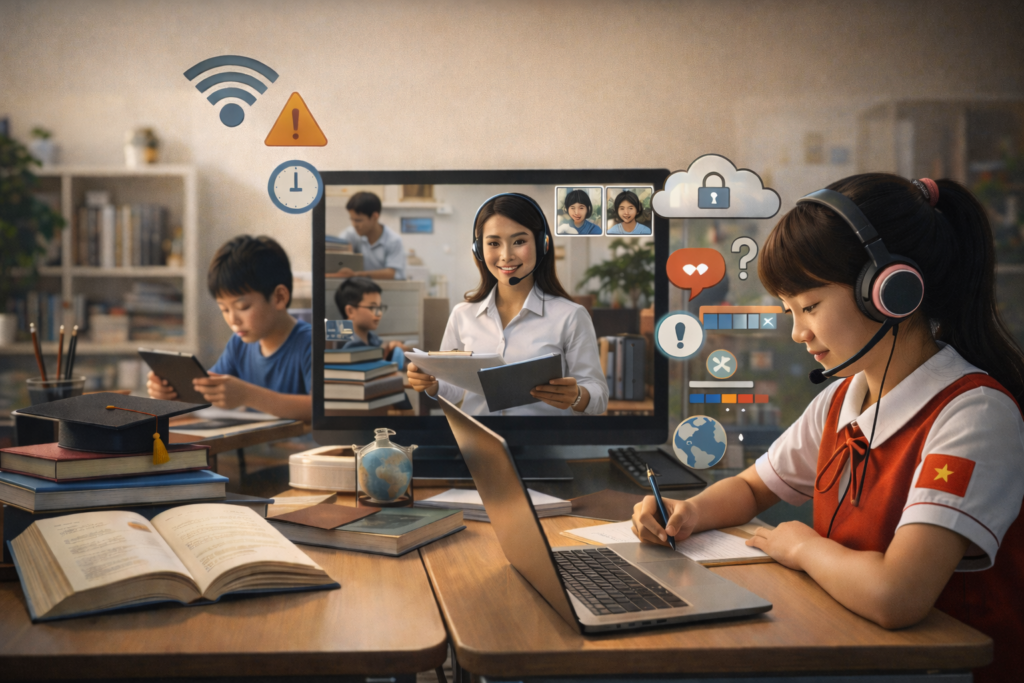
Most of the schools transitioned from in-person classes to digital environments. Even though many of us were not sure of how to carry on with the new challenges, we simply had to learn on the way. A few months later, everything changed, and schools were able to keep teaching students, which was a very positive thing for the students and everyone involved in it. The education industry generates a substantial number of jobs. Thousands of people and their families rely on this sector as their main source of income. When digital systems allowed schools to reopen virtually, many felt relieved. Even the youngest students learned how to cope with the new teaching methods, and that left me with a very important lesson.
What are the challenges and benefits of digital education? First and foremost, significant investment is required for both students and institutions to access technology and develop basic digital literacy skills. In many rural areas of developing countries, access to potable water remains a challenge; therefore, reliable internet, tablets, and consistent electricity may still be considered luxuries. However, once it is done, it could have a dramatic impact on the community and change the lives of all the inhabitants, and reach deep in places where it has never been before. This may even reflect on lower migration from the underdeveloped areas to the main cities, slowing down urbanization and giving a better quality of life to the people everywhere.
The world continues to evolve and waits for no one. If we do not adapt and keep up with its rapid changes, we risk being left behind.
Open Digital Society and Data Protection
An open digital society has created unprecedented levels of connectivity, transparency, and access to information. At the same time, it has increased concerns about privacy and the protection of personal data. Information now flows constantly between companies, public institutions, and digital platforms, raising important questions about who controls this data and how it is used.
The General Data Protection Regulation (GDPR), which entered into force in 2016 and became applicable in 2018, was designed to strengthen individuals’ rights and improve data protection within the European Union. It gives people the right to access their data, request corrections, and even demand its deletion. While this reform has increased awareness, many individuals still accept terms and conditions without fully understanding how their data is processed.
From a professional perspective, the impact of GDPR is clear. In hospitality, customer information such as contact details, payment data, and personal preferences must now be handled with stricter security measures and transparent policies. This increases administrative responsibility, but it also strengthens customer trust. In education, especially during the rapid digital shift caused by the pandemic, institutions had to ensure that online platforms complied with data protection standards. This improved accountability but also required additional training and documentation.
The positive effects of GDPR include stronger privacy rights, better data security practices, and greater transparency. However, compliance can be demanding and costly, particularly for smaller organizations. Moreover, despite regulation, data breaches and cyber risks continue to exist.
In an open digital society, innovation and openness must be balanced with responsibility and protection. The GDPR is an important step in that direction, but continuous awareness and adaptation remain essential.
Artificial Intelligence in My Working Field
For this task, I asked ChatGPT how artificial intelligence could be used in restaurants, hotels, and education, which are the areas where I have professional experience.
In restaurants, the answers focused mainly on demand forecasting, inventory management, and customer service automation. AI can analyze historical sales, predict busy periods, and help reduce food waste by adjusting purchasing decisions. It can also support online reservations and respond to common customer inquiries. From my experience in hospitality, these applications are realistic and already partially implemented in many places.
In hotels, ChatGPT explained how AI can support revenue management through dynamic pricing, personalize guest experiences based on previous stays, and assist with operational tasks such as housekeeping scheduling or predictive maintenance. These answers were accurate, especially regarding pricing systems, which are already heavily data-driven. However, the human interaction element, which is central in hospitality, cannot be replaced by artificial intelligence.
Regarding education, the system suggested that AI can help teachers prepare lesson plans, create exercises, support grading, and adapt materials to different student levels. Based on my time teaching in Vietnam, I can see how useful this could have been, especially during the pandemic when everything moved online. Preparing materials quickly and adjusting content for different learners requires significant time, and AI can support that process.
Overall, the answers provided by ChatGPT were correct and logically structured. However, they were quite general and did not fully capture the complexity of real-life situations. Artificial intelligence works based on patterns and available data, but it does not understand emotions, cultural nuances, or the unpredictable nature of human behavior.
In general, I see artificial intelligence as a supportive tool rather than a replacement for professionals. It can increase efficiency, reduce repetitive tasks, and improve decision-making through data analysis. At the same time, there are risks related to data protection, overdependence on technology, and the possible loss of human connection, especially in service industries and education.
Artificial intelligence has strong potential, but its value depends on how responsibly and ethically we choose to use it.
Self reflection
While working on this assignment, I realized how limited my understanding of digitalization actually was. Reading posts written by other students was particularly valuable, as they showed how digitalization is being implemented across many fields that surround us daily, even though we rarely think about how they truly function. It was also interesting to watch the course videos and read the materials. Even though some of the videos were produced several years ago, they introduced technologies and applications that I was not previously aware of.
Overall, this assignment has been an eye-opening experience. It helped me understand that the world is steadily moving in one direction, and staying up to date with digital developments is no longer optional. These changes may represent not only challenges, but also important opportunities for the future.
Posts I have commented: