In the hospitality field, technology helps, but it is not like many other digitalized industries where changes happen very fast, and tools are created to automate processes. In fact, it may mean that the hospitality industry is one of the few that relies deeply on human connection as the main tool to create experiences. However, this does not mean that technology and digital tools stay at bay; it simply means that these technological innovations are integrated into hotels and restaurants at a slower pace. Tech companies are keen on investing and developing new products and services, while my current industry can only utilize these devices at the moment to reduce costs and enhance the guest experience. Even if the latest technological advances were implemented as soon as they are developed, there might be some guests, customers, employees, and internal stakeholders who would have a hard time using them or adapting to them frequently.
For these reasons, hotels and restaurants integrate e-platforms at their own pace, as rapid implementation may cause resistance from both customers and employees.
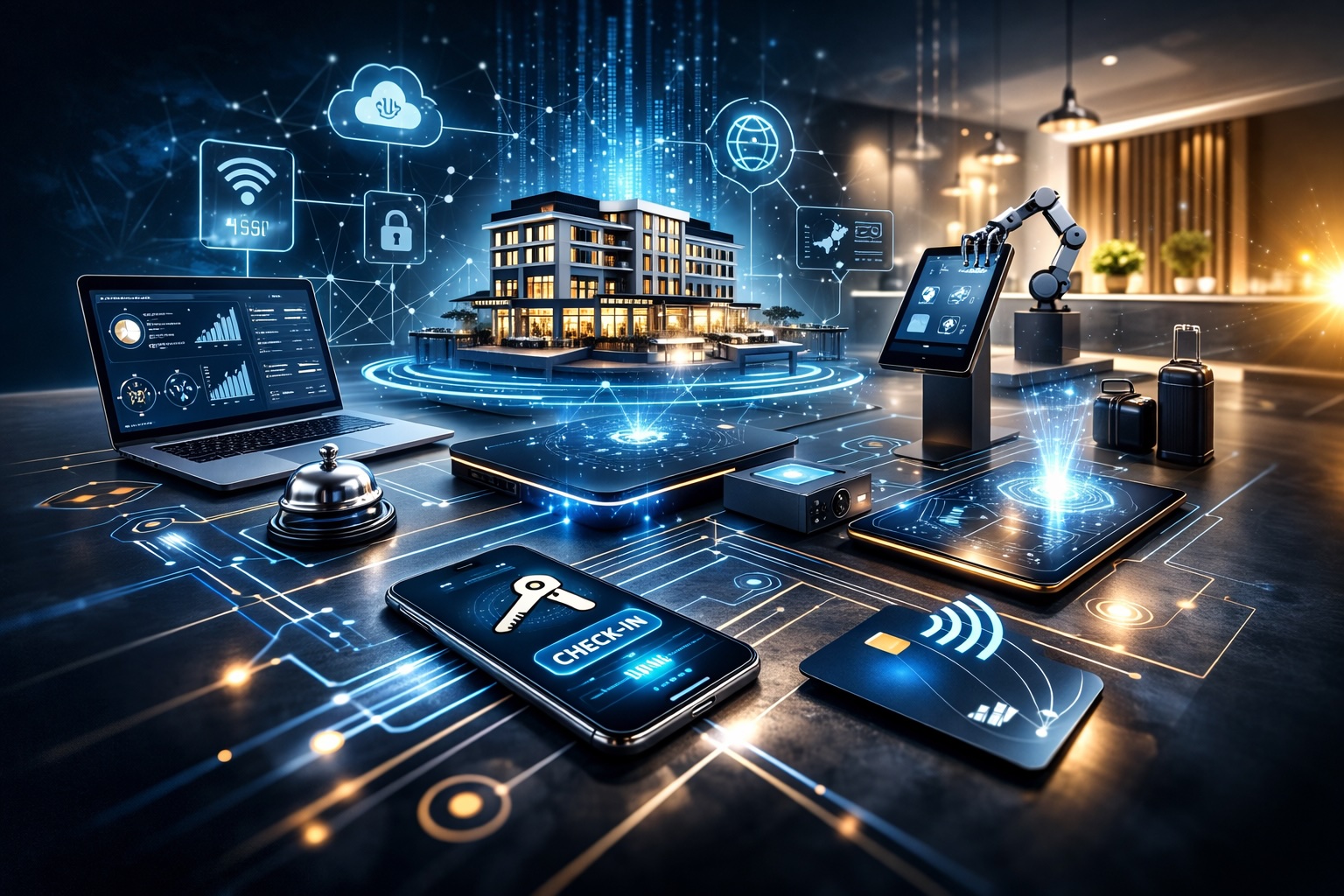
e-platforms used at work
One of the most common platforms used at work is Google Chat. Why do I think this is one of the most useful apps and platforms, and what is the biggest disadvantage?
In the past, hotels relied on radios, phone calls, and emails to communicate. Even though it was quite effective, the success of the communication relied on specific conditions. For instance, the accessibility that staff had to emails, a computer, a mobile phone, the phone numbers of managers, and so on. Google Chat, unlike other apps such as WhatsApp, uses the work email to connect people within an organization. This means that the phone numbers and personal details of users are protected, and they only share the information they are willing to.
Google Chat also allows people to create groups, thus transmitting messages effectively to targeted groups. For example, hotels and restaurants can have one group with all the staff, one for the marketing department, one for the food and beverage department, and as many as needed.
Another advantage is that the e-platform allows people to make audio or video calls using the company email to contact any other person registered in the same database with a company email.
So, if there are so many positive aspects of this tool, how can it have any disadvantages?
The answer is simple and based merely on my experience using this tool in a professional environment. The issue is not the app itself, but how it is used. For example, since almost everyone has a mobile phone, it is easy to access this app at any time, even unintentionally. This translates into a more difficult way to remain disconnected when people are not at work. In the same way, it becomes easier to contact colleagues outside working hours, not because they do not want to be contacted, but because this may not be healthy for maintaining a good work-life balance.
Finally, another issue that arises is the amount of information that flows through this tool. Because many departments and people are connected, and every topic is relevant to specific groups, the number of groups and repetitive messages can become overwhelming.
To conclude, this digital tool has definitely improved communication in hotels and workplaces, but there is still room for improvement.
Possitive and negative side of social media
Social media has become an essential part of the hospitality industry. Many guests form their first impression of a hotel through Instagram, Facebook, or online review platforms before even stepping inside the property. In that sense, digital presence has a direct impact on business performance.
On the positive side, social media increases visibility and allows hotels to present their services, atmosphere, and experiences to a global audience. It creates direct interaction with guests and provides immediate feedback. Reviews and comments can help identify areas for improvement and strengthen customer relationships.
However, social media also brings challenges. Expectations created online may not always match reality, which can lead to disappointment. A single negative post can spread quickly and affect the reputation of a property. There are also concerns related to privacy and data protection when guest information or images are shared publicly.
In my opinion, social media should support the hospitality experience, not define it. The human connection and authentic service remain the most important elements, while digital platforms should simply enhance communication and visibility.
Selecting digital tools
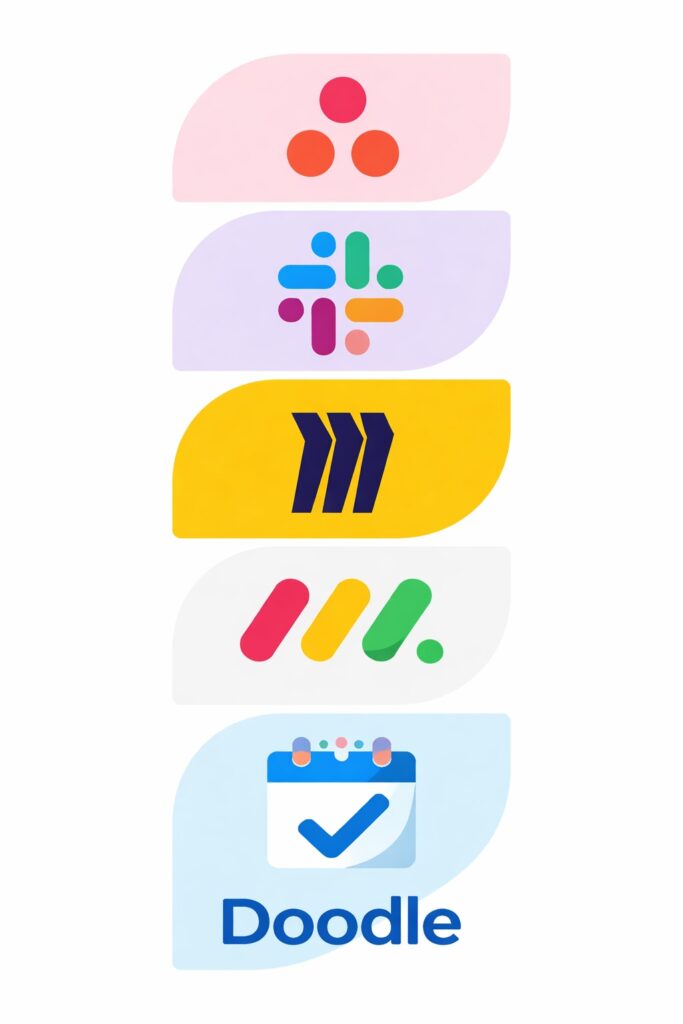
I chose these five tools because they represent different aspects of digitalization that are directly connected to my daily work in hospitality. Asana and Monday focus on structure and workflow management, which are essential in environments where coordination and timing are critical. Slack represents internal communication, which is one of the most important elements in hotel operations. Miro supports service design and strategic thinking, allowing teams to analyze and improve the guest experience. Finally, Doodle reflects the practical reality of scheduling and coordination in a shift-based industry.
Together, these tools show how digital platforms can support organization, communication, planning, and collaboration in hospitality. They do not replace human interaction, but they enhance efficiency and structure behind the scenes. I selected them because they reflect realistic operational needs rather than purely theoretical digital solutions.
Asana
Task and Project Coordination
At work, could be used to coordinate projects that require collaboration between different departments. In a luxury hotel, many initiatives involve multiple teams, such as preparing for high season, organizing special events, or implementing service improvements.
Using a structured task management platform would allow responsibilities to be assigned clearly, deadlines to be monitored, and progress to be visible to everyone involved. This could reduce misunderstandings and ensure that operational standards remain consistent.
Slack
Internal Communication
Communication is one of the most important elements in hospitality. At work, Slack could be used to centralize communication between departments. Different channels could be created for front office, housekeeping, food and beverage, and management, allowing information to flow more efficiently.
Compared to emails or traditional messaging applications, Slack provides faster communication and better organization of conversations. Important updates can be pinned, and files can be shared easily.
Miro
Service Design and Experience Planning
Miro is a collaborative digital whiteboard that allows teams to visually map ideas and processes. At work, I could use Miro to analyze and improve the guest journey.
For example, mapping the entire experience of a guest from reservation to departure could help identify potential gaps or opportunities for personalization. Visualizing each touchpoint would allow the team to better understand how different departments contribute to the overall experience.
Monday
Wokflow Optimization
Monday.com is another project and workflow management tool, but it focuses more on visual workflow tracking and automation. At work, it could be used to monitor recurring processes such as maintenance schedules, inventory control, or event planning timelines.
It allows processes to be visualized in dashboards, which makes it easier to track progress and identify delays. This is particularly useful in environments where timing and coordination are essential.
Doodle
Scheduling and Coordination
Doodle is a simple but very practical tool that could be used at work to coordinate meetings and training sessions. In hospitality, schedules are often complex because different departments operate on shifts. Finding a suitable time for everyone to attend a meeting can become a challenge, especially when operational priorities come first.
At work, Doodle could be used to organize internal briefings, cross-department meetings, supplier discussions, or training sessions. Instead of sending multiple emails back and forth, participants can simply mark their availability. This makes the process faster and more transparent.
Elements of Successful Use of Digital Applications
The success of digital applications in hospitality depends less on the tool itself and more on how it is implemented. First, there must be a clear purpose. Technology should solve a specific operational need, not simply be introduced because it is available.
Training is also essential. Employees must feel confident using digital platforms, otherwise resistance may appear. In addition, there must be balance. Hospitality is built on human interaction, and digital tools should support, not replace, personal service.
Finally, responsible use is crucial. Clear communication guidelines, respect for work-life balance, and attention to data protection ensure that digitalization improves efficiency without creating unnecessary stress or risk.
When these elements are present, digital applications can truly enhance both operations and the guest experience.
Self reflecion
Throughout this assignment, I learned many valuable things about different apps, tools, and digital innovations that can support daily work across various industries. Exploring these platforms helped me understand how structured communication, workflow management, and collaboration tools can significantly improve efficiency and organization.
At the same time, this process reminded me that technology should remain a support system rather than the center of everything. Especially in hospitality, where human interaction defines the experience, we cannot lose the human touch. Digital tools can enhance coordination and performance, but empathy, authenticity, and personal connection are still what truly create memorable experiences.

-
—
by