DIGI CITIZEN
Exploring Digitalization and the Impact of Virtual Services on Social Insurance, Healthcare, and Online Shopping
In recent years, the world has shifted toward digital services, making traditional systems more accessible and efficient. In Nepal, this change has affected social insurance, healthcare, and e-commerce, bringing both opportunities and challenges. As more people use digital technology, the gap between those who can access online services and those who cannot has become an important issue. This blog post will look at digitalization in Nepal, focusing on social insurance, healthcare services, online shopping, and the digital divide. I will share personal insights and experiences to discuss the benefits and challenges of this digital transformation.
Local Social Insurance System and Digital Services in Nepal
Nepal’s Social Security Fund (SSF) is the main part of the country’s social insurance system. It started in 2011 to help workers, especially those who are self-employed or work in the informal sector. The SSF provides important services, including health insurance, retirement protection, maternity and accident benefits, and disability insurance. It was created to fill gaps in older systems that were often limited and hard to access for many informal workers. Nepal has also made important progress in offering digital services for its social insurance. The SSF has a mobile app and website that allow users to manage their accounts, check their balances, and track their claims. These tools make it easier for people, especially those in remote areas, to access the services they need. The app and website also enable direct payments and benefits, which help reduce delays and corruption in the system. However, there are challenges to using digital services for social insurance in Nepal. Many people in rural and undeveloped areas lack access to the internet and smartphones. Some workers may also not have the skills needed to use these digital services effectively.
Digital Services in Healthcare in Nepal
The healthcare sector in Nepal is changing due to digital technology, making medical services more accessible. Digital health platforms like NepMeds offer online consultations, helping people in remote areas get medical care. Telemedicine services also allow rural residents to consult doctors from a distance, which is especially important in a country with many geographical barriers. Nepal has introduced the OpenIMIS platform, which manages health insurance and social protection programs. This open-source software improves the efficiency and transparency of the healthcare system, ensuring health benefits and services are distributed reliably. These digital services provide clear advantages. They make healthcare easier to access, especially for people in rural or underserved areas. They also improve the healthcare system by reducing waiting times, cutting costs, and offering more personalized care. However, challenges remain. Many people in rural areas may not have the internet or technology to use these services, and some lack the skills to navigate them. Privacy and data security are also concerns, especially for personal health information.
Evaluating Online Shopping Platforms
E-commerce platforms like Amazon, eBay, Booking.com, and Trivago have changed how people shop. They offer a wide range of products and services easily online. However, it’s important to compare their prices and reliability to local shops. Amazon and eBay usually have good prices, especially for products not found locally. But shipping fees can increase the total cost. Delivery times are often longer than buying from local stores, which can be a problem if you need something quickly. Sometimes, local shops might be cheaper when you consider shipping and wait times. Trusted platforms like Amazon and eBay offer buyer protection and customer support. However, there can be risks when buying from third-party sellers or less-known listings. Trivago, which lists hotel prices, can also show prices that differ from what is actually available. In Nepal, unreliable internet can cause problems when buying from international sites, leading to shipping delays and payment issues. Also, there may be fewer protections for international purchases regarding returns and refunds.
One Service from My Field: Social Security Fund (SSF)
As I’ve mentioned before, one important digital service in Nepal is the Social Security Fund (SSF). I want to share this service because it helps improve the lives of informal workers. I have used the SSF mobile app, and it makes managing contributions and benefits much simpler. The app lets me quickly check my balance, track my contributions, and see my accumulated benefits, all of which were harder to access before. Using the SSF service has many benefits. First, the app makes it easy to access information, saving time and effort. Second, direct payment disbursements help many users, especially those in remote areas. The platform is also straightforward to navigate, and I appreciate how transparent it is about my account status. However, a downside of the service is that not everyone can access it. People living in areas with poor internet access or who have limited access to smartphones may struggle to use SSF’s digital services. Additionally, the app could provide more educational resources to help users understand social insurance better, especially first-time users.
The Digital Divide and Its Risks and Challenges
Digitalization has many benefits, but a significant digital gap exists between different groups of people. The digital divide means some individuals have access to digital tools and services while others do not. This gap brings several challenges:
Economic Inequality: People without internet access miss out on job opportunities, online payments, and e-commerce. This situation worsens economic inequality, especially in developing countries like Nepal, where urban and rural areas differ widely.
Educational Disadvantages: Without access to digital services, people have fewer chances for online learning. Many educational resources are online, so those without internet access struggle to keep up.
Social Isolation: Digital services like social media and online communication are important for daily social life. People who cannot access these platforms may feel alone and disconnected from their communities.
Health Risks: Not having access to online healthcare and telemedicine can lead to worse health outcomes, especially during emergencies or in places with few physical healthcare facilities.
Privacy and Security: As more people rely on digital platforms, the risk of data breaches and privacy issues increases. Those who lack digital skills are also more likely to fall victim to scams and identity theft.
Digital Competence Test
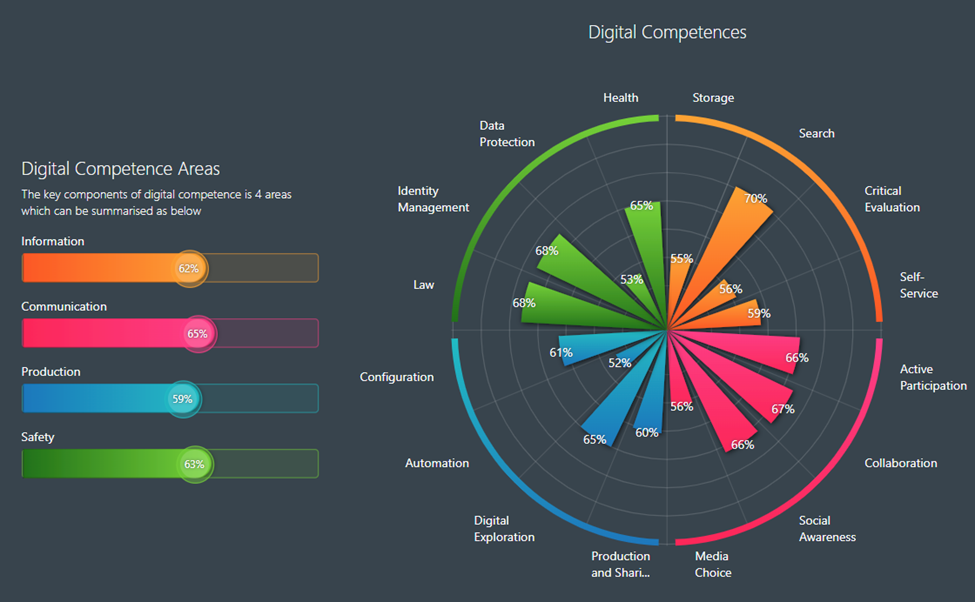
Below is a screenshot of the result of my digital competence test.
Self-Evaluation
In this assignment, I learned how digitalization affects our everyday lives, both for individuals and organizations. Digital services have advanced in areas like social insurance, healthcare, and e-commerce. However, many people still lack access to these services, which creates a digital divide that needs to be addressed. My research and personal experiences showed me that digital services can improve access, efficiency, and transparency. Still, there are challenges to overcome. We need to focus on building better infrastructure, improving digital skills, and ensuring everyone has equal access to technology. This assignment helped me understand how digitalization impacts different parts of society. It is important to create solutions that include everyone. As technology continues to change, we must work towards a future where no one is left behind because they do not have access to digital services.