Portugal might be famous for sunshine and slow living, but when it comes to public services, things are becoming surprisingly digital. From social security to healthcare, digital public services have become part of normal life, not perfect, but undeniably practical. At the centre of it all is ePortugal, which acts as the main entrance to public services, guiding users towards specialised platforms.
The main digital service I use is Chave Móvel Digital (Digital Mobile Key) which allows me to securely access online public services. I mainly use it to confirm my identity when dealing with official matters, as it replaces the need for in-person verification and makes online access much simpler. I also occasionally use digital healthcare services through SNS 24 to access health information or access electronic prescriptions without immediately going to a health centre.
In terms of development trends, Portugal’s public services are becoming easier to use and better connected. This means less form-filling, fewer repeat submissions and a smoother experience overall. There is also a clear move towards mobile-first design, with services built to work properly on phones rather than just desktop computers, alongside growing efforts to support international users through simpler layouts and more English-language options.
Despite the progress, the system is not without its challenges. There is still a noticeable digital divide, particularly among older people or those who are less confident with technology, who may find online platforms confusing or even intimidating. Awareness is another issue as not everyone knows which services are available digitally or how to use them, so in-person visits are still common. Finally, despite improvements, language can remain a barrier, making navigation harder for newcomers.
Evaluating Digital Shops: Amazon as an Example
When something is needed and it is the first time trying a product, Amazon makes it easy to compare options. What I particularly like is how much information is available before buying anything. Product pages usually include detailed descriptions, customer reviews, star ratings and clear delivery and return information. Being able to read other people’s experiences and compare different sellers helps build confidence in the decision, especially when I do not have prior knowledge of the product.
This level of transparency makes choosing the right product far easier than in many physical shops, where information can sometimes feel limited or dependent on staff availability. On top of that, reliability has consistently been a strong point. Payments feel secure, deliveries are easy to track, and returns are generally straightforward, which adds to the overall sense of trust and convenience.
Digital Service
In my professional field, one service that has significantly influenced the way I work is an AI-enabled legal technology platform developed in-house. I chose this application because it is a practical example of how digital tools can meaningfully support knowledge-intensive work rather than simply automate tasks for efficiency alone.
From my experience as a user, the platform greatly reduced the administrative burden of legal work. Tasks such as document searching, docketing, record-keeping, and even aspects of drafting became faster and more accurate with AI support. This shift freed up valuable time for more strategic and analytical work, allowing me to focus on tasks that require human judgement and critical thinking. Instead of feeling controlled by technology, I felt supported by it. What stood out most was how seamlessly the tool integrated into daily workflows. Rather than replacing professional expertise, it enhanced it, showing how purposeful use of AI can increase productivity while improving the quality of work.
Digitalisation in Portugal
In Portugal, digitalisation has become part of everyday life faster than many people expected. Public services, healthcare systems, banking, and even basic administrative tasks are increasingly moving online. While this shift can be efficient and convenient, it also raises an important question: what happens to people who do not use virtual services?
For many individuals in Portugal, not using digital platforms is not about resistance to technology. It is often linked to age, limited digital skills, lack of access to devices, or simply feeling overwhelmed by complex systems. When services are designed with the assumption that everyone is online, people who are not digitally confident can quickly feel excluded.
Simple tasks like booking appointments, filling in forms, or accessing official information can become time-consuming or confusing without digital tools. In some cases, people may need to rely on family members for support, which can reduce their independence and confidence over time.
One issue that is often overlooked is the assumption that people will naturally adapt to digital systems over time. While many eventually do, problems arise when services assume a level of digital literacy that not everyone has. As Portugal becomes increasingly digital, this transition can move faster than some people’s ability to adapt. Being well educated does not automatically mean being digitally confident. Many people from older generations are capable, experienced, and knowledgeable, yet still feel uncomfortable using online platforms simply because those systems were not designed with them in mind.
Self-Reflection
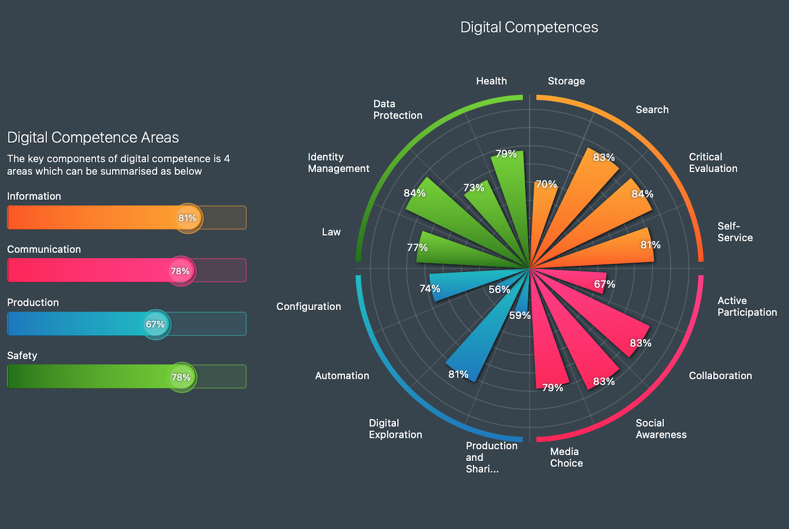
Working through these assignments encouraged a more thoughtful look at how digital tools are used in everyday life. The digital competence map confirmed that there is strong confidence in finding information online, evaluating sources, and using digital services independently, particularly in relation to public services and professional tasks. At the same time, it highlighted areas such as digital content creation, automation, and more technical configurations as clear opportunities for further development and personal interest.
One key learning from these assignments is that digital competence goes beyond practical skills. It also involves awareness of how technology shapes access, inclusion, and participation in society. Rather than being a fixed skill set, digital competence develops over time as technologies change and users continue to adapt. This reflection reinforced the importance of approaching digital tools not only with confidence, but also with awareness and responsibility.
Blog Comments: