Digitalization in Everyday Life
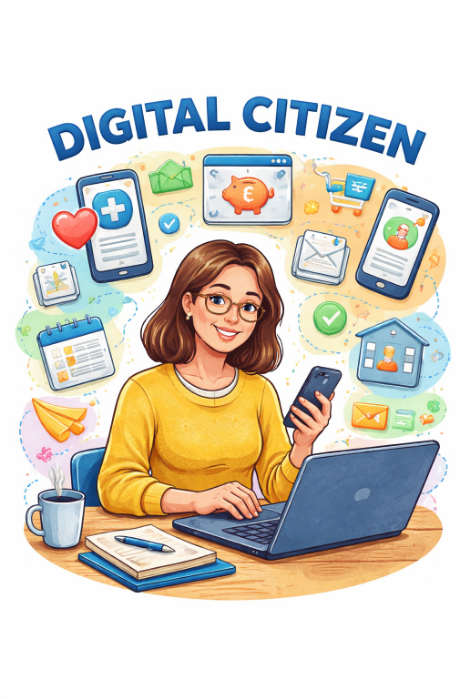
Picture: Ghat GPT 2026.
Digitalization is now an inseparable part of our daily lives. It is visible in healthcare, banking, education, and public services—almost everything we do every day. Many tasks that used to take time, such as paying bills or booking a doctor’s appointment, can now be handled quickly online. For example, OmaKanta allows easy access to personal health records, and the Social Insurance Institution of Finland (Kela) provides smooth electronic services. Digitalization is no longer just about technology; it is a central part of how we live and function in society.
Experiences with Digital Services
Kela
The Social Insurance Institution of Finland (Kela) offers various forms of support, some aimed at me personally and some for my whole family.
Personally, I use Kela’s medicine reimbursements and healthcare travel compensation when needed. If I become ill and cannot work, I can apply for sickness allowance to secure my income. While studying for my Master’s degree (YAMK), I may also apply for student financial aid, depending on my situation, provided my studies are full-time and my income remains below the allowed limits.
In our family, we receive child allowances for children under 17. The child allowance is an important part of our monthly budget and helps cover everyday expenses for our children. If necessary, our family may also be eligible for general housing allowance if housing costs are high relative to household income.
Kela’s services have supported us in different life situations, providing financial security both in daily life and during major life changes.
OmaKanta
I have used many digital services in my daily life, particularly in healthcare and public services. For example, OmaKanta has been an important tool for monitoring my personal health information. Checking lab results, renewing prescriptions, and reviewing visit records have increased my understanding of my own health. I feel that the service improves transparency and gives the patient a more active role in their own care.
Keva
I have previously checked my pension age and pension accrual. Sometimes I even received a letter by post with my current details. My minimum retirement age is 66 years and 10 months. My target retirement age is 68 years and 9 months. The upper age limit for pension accrual is 70 years. Retirement age has increased throughout my career. I will still be able to work in healthcare for a long time before retiring. I hope to stay healthy and work full-time until then.
Amazon – Online Shopping
I explored the offerings of Amazon’s online store. Amazon often provides lower prices and abundant product information, including images, technical
details, and customer reviews. The service is reliable when you check seller ratings and delivery terms. Amazon is suitable for consumers who want a wide selection and competitive prices,
while local stores offer speed and personal service.
I could also order products through Amazon’s online store myself.
Terveystalo – Private Healthcare Provider
I use Terveystalo’s healthcare services both as a private patient and through occupational healthcare. Terveystalo offers comprehensive and user-friendly online services, including an appointment booking system. Through the app, you can choose a doctor, view available times, and check prices in advance. This increases the consumer’s ability to compare options. However, price transparency can vary—the final cost may rise if additional tests are required.
Digital Divide
Digitalization has significantly changed our daily lives. Many services can now be accessed easily online. For those who do not use virtual services, a digital divide arises.
The digital divide refers to the gap between people who can use digital services and have digital skills and those who do not have access. It is not only a technical issue but also a social and economic one.
The digital divide often affects:
- Older adults with little experience using smart devices
- People who cannot afford computers or internet connections
- Individuals with limited language skills or learning difficulties
People who do not trust digital services:
- Challenges caused by the digital divide include:
- Reduced accessibility to services, such as booking appointments or handling official matters
- Difficulty managing finances without online banking
- Increased social isolation as more communication occurs online
- Limited access to up-to-date information and participation in society
Closing the digital divide requires both digital education and accessible, user-friendly services, as well as alternative ways to access services for those who cannot use digital channels. Digital equality is essential to ensure all citizens can benefit from the opportunities provided by
digitalization.
Digital Competence
My results of digital competence
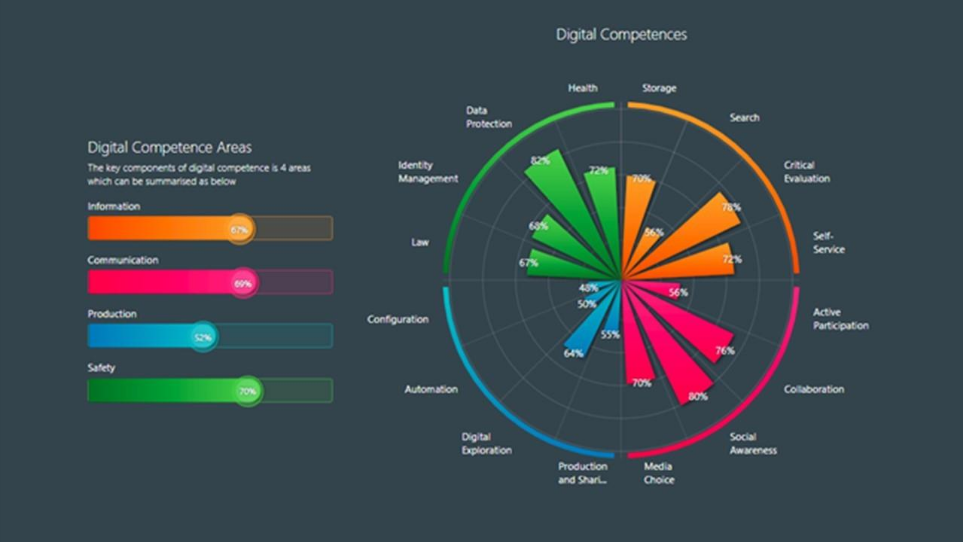
Based on the results, my strongest areas are security, communication, and information sharing. I still need improvement in managing production-related tasks.
Self-evaluation
Through these tasks, I reflected on my relationship with digitalization and my digital skills. I consider myself fairly competent in using digital services, such as online banking, appointment bookings, and healthcare apps. Still, I realized that data security and privacy require constant attention, and I do not yet fully master all digital tools.
I became aware of how significant digital skills are in everyday life and how easily people can be left out of services due to the digital divide. I learned to identify the risks and
challenges faced by those lacking digital skills, which enhanced my understanding of the issue.
One important lesson was that digital competence is not a fixed skill but must be continually developed. I also learned that critical thinking, evaluating information, and following safe practices
are essential in digital everyday life.
I reinforced my view that digitalization offers great opportunities, but its benefits are realized only if all citizens receive support and education to develop their digital skills. At the same time, I recognized my own strengths and areas for improvement in digital competence, which will help me act responsibly and effectively in digital environments in the future.
Blogs where I wrote my comments