

Social Insurance System and Associated Digital Services in Vietnam
The social insurance system in Vietnam has been steadily developing with numerous digital services aimed at facilitating citizens in accessing information and carrying out procedures related to insurance. Below are some of the digital services I have utilized:
- Electronic Portal of Vietnam Social Insurance: The official website of Vietnam Social Insurance provides a wealth of useful information, including policies, regulations, procedural guidelines, and online services.
- VssID Application: This is the mobile application of Vietnam Social Insurance, allowing users to look up personal information, history of social insurance participation, insurance benefits, and to carry out online procedures such as registration, reissuing social insurance books, and health insurance cards.
- Online Registration and Document Submission Services: Many administrative procedures related to social insurance can be performed online, saving time and effort for citizens.
Utilizing these digital services not only saves me time but also enhances the efficiency of managing and monitoring my insurance benefits.
The future development trends of the social insurance sector in Vietnam are expected to include several key points:
- Strengthening the Application of Information Technology: The social insurance sector will continue to develop online services, making it easier for citizens to access and complete insurance procedures more quickly.
- Developing Data Systems and Big Data Analytics: Establishing a big data system will improve the management of citizens’ benefits and assist in formulating appropriate policies.
- Expanding the Coverage of Participants: The government will encourage the expansion of social insurance participation, including freelancers and farmers, to increase coverage rates.
- Integration with Other Social Services: Social insurance will integrate with other social services such as healthcare and education to create a comprehensive social protection system.
- Transitioning to a Flexible Insurance Model: The social insurance sector may develop flexible insurance models, allowing citizens to choose insurance packages that suit their needs and financial capabilities.
These trends will not only enhance the operational efficiency of the social insurance sector but also improve citizen satisfaction with social insurance services.
Digital Services in the Social and Healthcare Sector in Vietnam
In the modern context, the healthcare sector in Vietnam is undergoing a significant transformation thanks to digital technology. Notable services include electronic health records, electronic medical records (EMR), online appointment scheduling, and telehealth. These services assist the public in managing their health, reducing waiting times, and enhancing the quality of medical care, particularly in remote areas.
The application of digital technology in the healthcare sector brings substantial benefits, including quick and convenient access to medical services and personal information at any time and from anywhere, thereby saving time for the public. Data is stored in a synchronized and accurate manner, providing doctors with a comprehensive view of patients’ health conditions, which in turn improves the effectiveness of management and treatment.
However, there are still many limitations, such as a lack of equipment and internet connectivity in difficult regions, issues regarding the security of personal health data, and a shortage of skilled technical personnel to operate digital systems.
Online Retail Platforms like eBay, Amazon, Booking.com, Trivago
Currently, online shopping has become an essential part of daily life for many consumers, with platforms such as eBay, Amazon, Booking.com, and Trivago standing out due to competitive pricing, product variety, and high reliability. The business model of these platforms allows them to offer better prices by sourcing directly from manufacturers and maintaining warehouses in multiple countries, which helps shorten shipping times.
The abundance of product choices from these platforms is also a strength, facilitating consumer convenience. Additionally, the credibility of these platforms is reinforced by consumer protection policies, such as money-back guarantees and return policies.
However, online shopping also faces certain challenges, such as product quality issues and reliance on technology. To maximize the benefits of online shopping, consumers need to equip themselves with knowledge and conduct thorough research on products and protection policies to enhance their shopping experience.
Personally, I have had some negative experiences with online shopping, leading to a loss of trust in local e-commerce sites. However, I still find a sense of reliability when choosing products from international online shopping platforms like Amazon and Booking.com.
A service/application in my field
In Vietnam, I work for an insurance company, so I understand that participating in insurance is essential for everyone’s life. When I had the opportunity to study in Finland, I was very surprised to see that people are always aware of and proactively participate in insurance. I have used Kela’s health insurance and Lahitapiola’s car insurance. I only need one bank account to manage all administrative, medical, and insurance procedures for my family.
In particular, I am very satisfied with Lahitapiola’s online services. All processes are conducted online, such as consulting on product packages, issuing contracts, and requesting insurance benefits, which is very quick and convenient.
Digitalization and the digital divide; risks and challenges for those who do not use virtual services
Digitalization and the digital divide refer to the disparities in access to and use of information and communication technology. Those who do not use virtual services face numerous challenges, including:
• Lack of economic opportunities: Difficulty in finding employment due to the demand for digital skills.
• Difficulties in accessing information: A lack of internet access leads to being unable to stay updated with news and educational information.
• Limited social communication: A sense of isolation due to the inability to connect through digital technology.
• Lack of access to public services: Inability to access healthcare, education, and administrative services that have transitioned online.
Notably, if you live in a developed country like Finland, digitalization is applied in all fields, and the government manages citizens by verifying online banking information. Therefore, if you are unable to use online services, you will face significant difficulties in both life and work.
Digital Competency Test
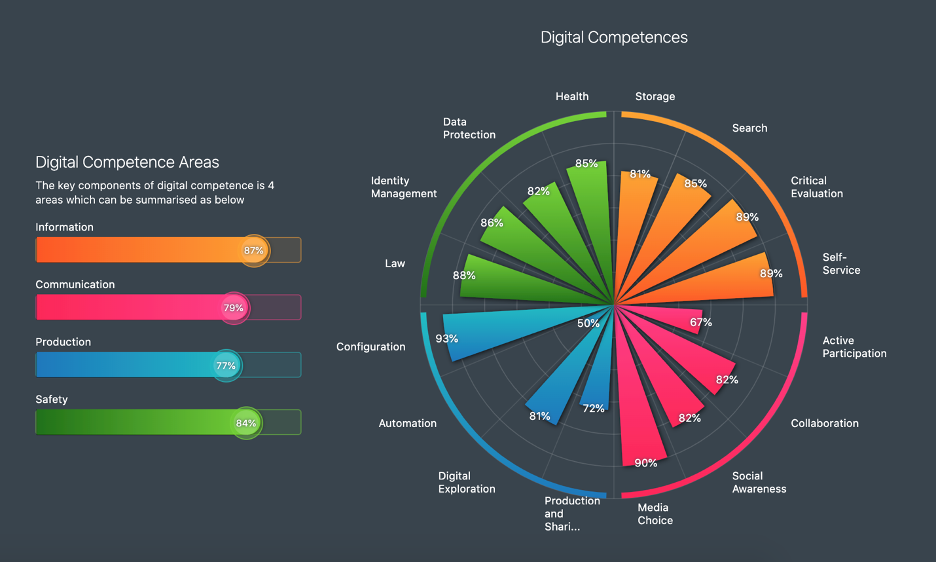
My Thoughts and Experiences
In the context of globalization and the continuous development of technology, the transition to digital services has become an inevitable trend. Through my personal experiences in Finland, I have observed a significant difference in the way digital services are provided here compared to Vietnam. The efficiency, convenience, and seamlessness of these services in Finland not only enhance the quality of life for its citizens but also promote economic and social development.
Firstly, the shift to digital services in Finland has created a favorable environment for users. Services ranging from taxation and education to public services have been optimized to provide the best experience for the people. Through my personal experiences utilizing various services from the government, city, hospitals, and schools, I have noted that the convenience and user-friendliness of these services are commendable. This not only saves time but also minimizes unnecessary hassles in interactions with authorities.
I recognize that while technology offers numerous benefits, it cannot be denied that some individuals still face challenges in accessing digital services. Those who are unfamiliar with technology or lack the means to use digital devices may be left behind in this development process.
The transition to digital services in Finland serves as a successful model that Vietnam can learn from. However, to achieve similar successes, Vietnam must consider its own cultural, social, and economic particularities. The implementation of technology must be accompanied by appropriate support policies to ensure that no one is left behind in this development journey. Collaboration between the government, businesses, and communities is essential to building a sustainable and inclusive digital ecosystem.
In conclusion, I believe that the development of digital services will continue to increase in the future, bringing numerous benefits to society. However, we must also be cautious and attentive to the challenges that this process presents. Only by knowing how to combine technology with human interaction can we build a truly effective and sustainable customer service system.
I commented