DIGITALISATION IN THE MUSIC BUSINESS
Digitalisation in the music industry has enabled collaboration and creativity on a global scale. In the past, files were stuck on a local hard drive, and the work was done in a studio. Nowadays, music can be created anywhere where the music maker has a working laptop, internet connection and adequate amount of battery. The data has gone “fluid” (Cukier, 2014), and the digital assets can be accessed collaboratively and in real-time.
Platforms like Sonobus, Abbie Road Studios’ Audiomover LISTENTO-software and other low-latency audio streaming services have made it easier for music makers to write and record music from anywhere in the world real-time. SonoBus is an application for musicians and producers to write and record with low latency between devices over the internet (Sonobus, n.d.). On the other hand, Abbey Road Studios claim that over 90% of their recordings are now done remotely using their Audiomover LISTENTO application (Abbey Road Studios, n.d.).
Why open, collaborative offices do not work for musicians
The video by Tran (2014) demonstrates how the office spaces of the future should be open and flexible enabling collaboration. Digital technology has changed the way a music maker works, but the requirement for a quiet, private and sensory-optimized workspace is still the same.
Many newly built buildings are designed to be open plan with minimal walls and partitions. As a businessperson with a diverse professional background in the creative industries, I have experienced the practical impact of this design from multiple perspectives. I think open plan offices are a great opportunity for a business student, to work and collaborate, but for a music maker, the open solution is not possible. Making music and recording requires an acoustically optimized space, where the music maker can focus on the music and mix efficiently. This usually happens at music maker’s own home or in a professional studio.
Privacy and cyber security
As Yen (2014) points out, unencrypted emails are not private at all and open to surveillance. Cybercrime happens every day and the weakest link in the chain is the human. Scammers and hackers use social engineering to trick people into giving away information. Also, using the same password more than once and forgetting to update software are the most common mistakes in cyber security (Lyne, 2013). To fight these risks, the European Union started the General Data Protection Regulation (GDPR), which entered into force in 2016 and was implemented by member states by May 2018 (European Data Protection Supervisor, n.d.).
The GDPR strengthened existing data protection laws and regulations and created new ones. Due to the GDPR, citizens have the right to receive their personal data from organisations. Citizens also have the right to be forgotten and not profiled, unless it is necessary for following the law or contract (European Data Protection Supervisor, n.d.).
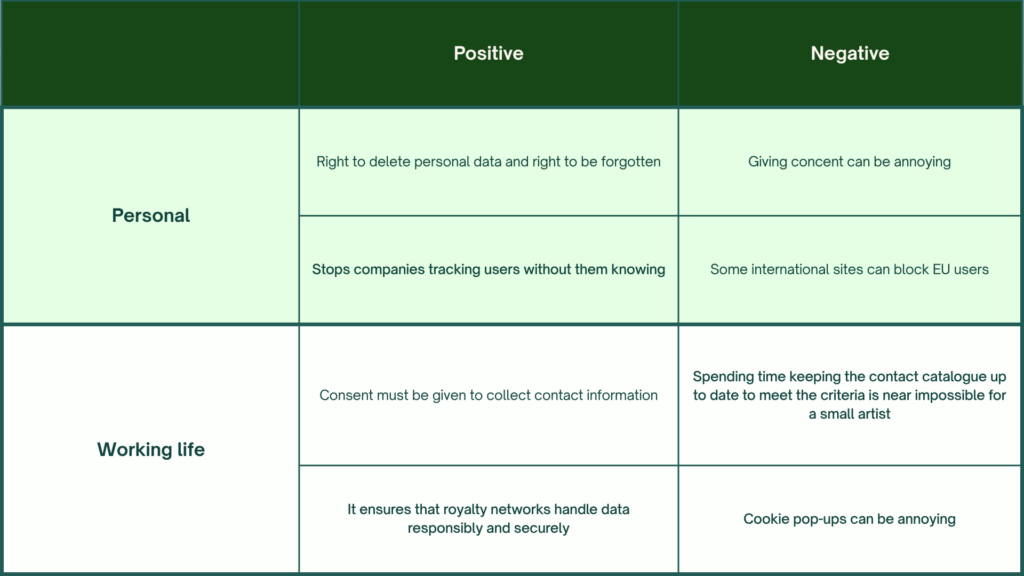
Table 1: Comparison of positive and negative aspects of AI in both personal and working life.
AI and copyrights
Biggest change in the music industry is the use of generative AI. Cukier (2014) warns that the big data and machine learning hold potential to take away human jobs. Copyrights are an essential part of the music industry, and its revenue model and AI have posed a threat to this structure.
However, Teosto, the Finnish copyright organization, has announced in its 20.5.2026 press release that it has approved a separate category for the use of AI in the last general meeting. The goal is to enable AI to be recorded in the data of works as a separate category and thus ensure that copyright holders retain sufficient control over the use of their works (Teosto, 2026).
Teosto has defined three categories of AI use.
- AI as a creative aid: AI is used as a technical aid in the creation process, and the work has been created with significant human input. The author has made enough creative input and creative decisions in the creation of the work, that surpasses the threshold of originality.
- Part of the work is created by AI: For example, the lyrics of a song are created by AI, but composition is the result of free human artistic creation. In this case, AI is credited as the lyricist in the metadata, while the person who composed music is registered as the composer.
- Works fully generated by AI: These works cannot be registered in the Teosto database, and they are not protected by copyright, thus cannot generate revenue (Teosto, 2026).
Put simply, the new classification of Al-use strengthens the protection, copyright and earning potential of human creators and works. By creating a separate category for the AI, it is simultaneously excluded from copyright protection, and the rights are reserved for the human creative work. In addition, negotiations are underway to introduce an adaptation to rights management consent (Teosto, 2026).
Even now, under the Copyright Act, the use of copyright-protected works requires the consent of the right holders. The use of works for the developmentor training of artificial intelligence applications requires a permission from Teosto, unless otherwise provided by the applicable legislation (Teosto, n.d.). The Finnish copyright act (404/1961, 13 b §) already gives the authority to the copyrightholders to prohibit the use of their works in the contexts they don’t want them to be presented.
Teosto explains that they have not yet reached final agreements with AI operators, but report that negotiations are underway. The above-mentioned classification of AI use would be implemented when licensing agreements become relevant. This would be announced to copyright holders at least three months before the entry into force of the new amendment to the classification change (Teosto, 2026).
Which, in my opinion, is a bloody brilliant thing! I specialise in the field of folk music and even the thought of AI generating folk music is deranged. Folk music all about where we have been, where we are and who we are. It is human history and culture with its traditions, characteristics and aesthetics. At this moment in time 2026, AI is not sentient, it doesn’t have a culture or sense of personal identity or chain of ancestors. Thus it should not have a say in the histories of nations.
I asked ChatGPT to answer few questions:
”What do you think about AI creating folk music?”
In short the answer was that ”AI can create convincing folk-like music, but it’s a different thing reproducing the surface of folk than living in the tradition. AI can’t have a community memory, it doesn’t have a sense of regional identities or chain of ancestors.”
“What is your process for creating a song?”
ChatGPT answered with mostly answers that I can agree with, but with precision that it became unnecessary. AI recommended to think about “where the bow attack matters”, but I’m not sure what the AI means with a “bow attack”.
“Can you make me a song with your recommendations?”Here I learned that ChatGPT cannot create an audio file like Gemini. ChatGPT creates an outline of the song in text form, which is adequate on paper, but at closer look, seems to be a bit off. For example, the instrumental hook is presented with a mathematical function y = sin(x) + 0,3sin(4x).
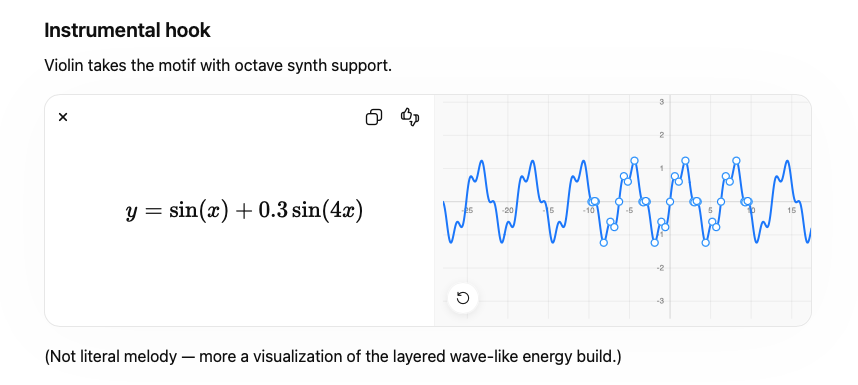
Image 1: Artificially generated tension chart in a folk song
I asked further to create score notation of the song that I can import to music notation software. The result wasn’t convincing.
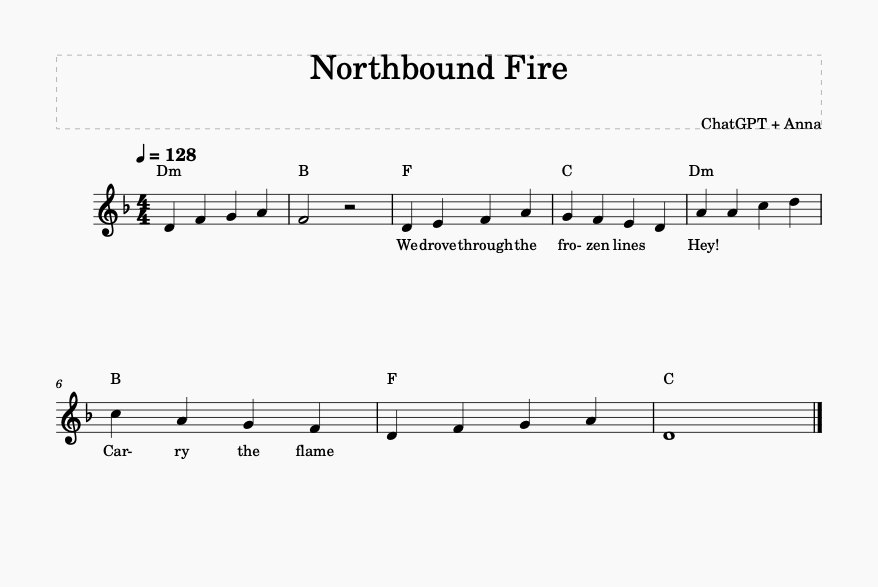
Image 2: Artificially generated notation of a folk song
Conclusion and self-evaluation:
This task helped me to understand the importance of data protection and how it affects both personal life and working life. I deep dived into the newest developments of copyright and AI. It was interesting and relieving to see how Teosto has started to use regulation to protect the rights of artists and creators.
AI seems to agree and adapt to my personal opinions, but on the other hand, it seems not to be able to create output that passes professional expertise and work experience. In conclusion, AI is a great farmhand, but a bad master.
I commented on
- https://blogi.savonia.fi/siljaheliste/digi-society/
- https://blogi.savonia.fi/mariatikkala/digi-yhteiskunta
References (APA7)
OpenAI. (2026). ChatGPT. OpenAI GPT-5.5 -model. [Large language model]. https://chatgpt.com. Accessed for the purpose of this task, May 2026.
Google. (2026). Gemini (3 Flash version). [Large language model]. Accessed for language check, May 2026. https://gemini.google.com
Abbey Road Studios. (n.d.) Reinventing the remote production experience. https://www.abbeyroad.com/audiomovers
Cukier, K. (2014, June). Big data is better data. [Video]. TED Conferences. https://www.ted.com/talks/kenneth_cukier_big_data_is_better_data
Copyright Act (404/1961). (Finland). https://www.finlex.fi/fi/lainsaadanto/1961/404#chp_1
SonoBus. (2023). High quality network audio streaming. [Ohjelmisto]. https://www.sonobus.net
Teosto ry. (n.d.). Tekoäly osana luovan alan menestystä. https://www.teosto.fi/musiikintekijalle/palvelut/edunvalvonta/tekoaly/
Teosto ry. (2026, 20. toukokuuta). Jäsenet valitsivat hallituksen ja päättivät tekoälyn oikeusluokasta. Uutiskirje. https://www.teosto.fi/teoston-kevatkokous-valitsi-hallituksen-ja-paatti-uudesta-tekoalyoikeusluokasta/
Tran, T. (2014, 1. lokakuuta). Office of today, workplace of tomorrow [Video]. YouTube. https://www.youtube.com/watch?v=K-pJxlChXKw
0 Comments