DIGI CITIZEN
Social Insurance and Digital Services in the United Arab Emirates
Living in the United Arab Emirates (UAE), I familiarized myself with the local social protection and digital government services. The UAE provides different social protection, healthcare, insurance, employment and government services for both UAE citizens and residents, although eligibility for some benefits and Programs can differ depending on a person’s status. One digital service I personally use is SEHA for healthcare. I access healthcare services digitally and use UAE PASS to log in. UAE PASS is the UAE’s national digital identity and is used to access many government and other digital services.Using digital healthcare services makes it easier to access healthcare information and services without always needing to visit a healthcare facility. SEHA provides digital access to services such as appointments and patient-related services through its online platforms.
The development trend in the UAE is towards more integrated and user-friendly digital services. Government services are increasingly available online and through mobile platforms, while UAE PASS provides a unified way to access different services. The UAE is also introducing AI-supported government services, showing that digitization is becoming an increasingly important part of everyday life.
From my experience, these digital services make healthcare and government processes more convenient and accessible. They reduce the need for physical visits and make it easier to access services when needed.
Digital Services in Healthcare in the UAE
Digitalisation has become an important part of healthcare in the United Arab Emirates. Healthcare organisations use electronic health records, digital platforms, mobile applications, telemedicine and other technologies to support patients and healthcare professionals.
Digital services include online appointments, electronic laboratory results, e-prescriptions and remote consultations. Electronic health records can also help healthcare professionals manage and share relevant patient information. Artificial intelligence and connected technologies are developing as additional tools for analysing information, monitoring patients and supporting healthcare professionals. From my experience, SEHA is a reliable application for accessing healthcare services. It provides useful digital services and makes managing healthcare-related tasks easier.
Advantages and Disadvantages
Digital healthcare can improve information flow, reduce some administrative work and support remote consultations. It can also help healthcare professionals access relevant information more efficiently. However, technical problems, system failures and poor communication between different digital systems can create difficulties. Some people may also have limited digital skills or access to technology. For this reason, traditional healthcare services are still important for people who cannot easily use digital services or need direct care. Overall, I think digital healthcare has become a useful part of healthcare in the UAE. My experience with services such as SEHA shows how digital tools can make healthcare services easier to manage in everyday life.
Digital Shopping and Price Comparison
I compared prices and information on Amazon.ae with a local UAE retailer, Sharaf DG. I found that prices can be different between online and local stores, especially when discounts or promotions are available. I found the product information on both websites useful because they provide details such as specifications, prices, delivery, warranty and customer reviews. I think this information is generally enough to help a consumer compare products before buying. I consider both services reliable, but I would still check the seller, warranty, delivery times and return policy before buying .
Digital Healthcare Application
I chose SEHA because it is related to my Digital Health field and I personally use it. I find it reliable and easy to use for managing healthcare services and accessing information. My experience with SEHA has been positive. It allows me to handle some healthcare tasks digitally without always needing to contact or visit a healthcare facility.
Digitization and the Digital Gap
Digitalisation has made many everyday services available online, but not everyone has the same digital skills or access to technology. This difference is known as the digital gap. People who do not use virtual services may have difficulties with online banking, government services, healthcare appointments, shopping and communication. They may also become more dependent on others to complete everyday tasks.
In healthcare, people with limited digital skills may find it difficult to access online information or services. Older people and those with limited experience with technology can be particularly affected.I think digital services should make life easier without creating barriers for people who cannot use them. Clear instructions, support and alternative ways of accessing important services can help reduce the digital gap.
Digital Competence Test
I completed the Digital Competence Test and received an overall score of 68% (Level 4 – Intermediate). My strongest areas were collaboration (81%), digital laws and regulations (80%), and digital storage (77%). These results show that I am comfortable using digital tools for teamwork, organising information, and understanding responsibilities related to digital content.
The assessment also identified areas where I can improve, including automation (51%), digital exploration (55%), and information searching (60%). I would like to develop my understanding of software development, explore new digital technologies, and improve my online search skills.
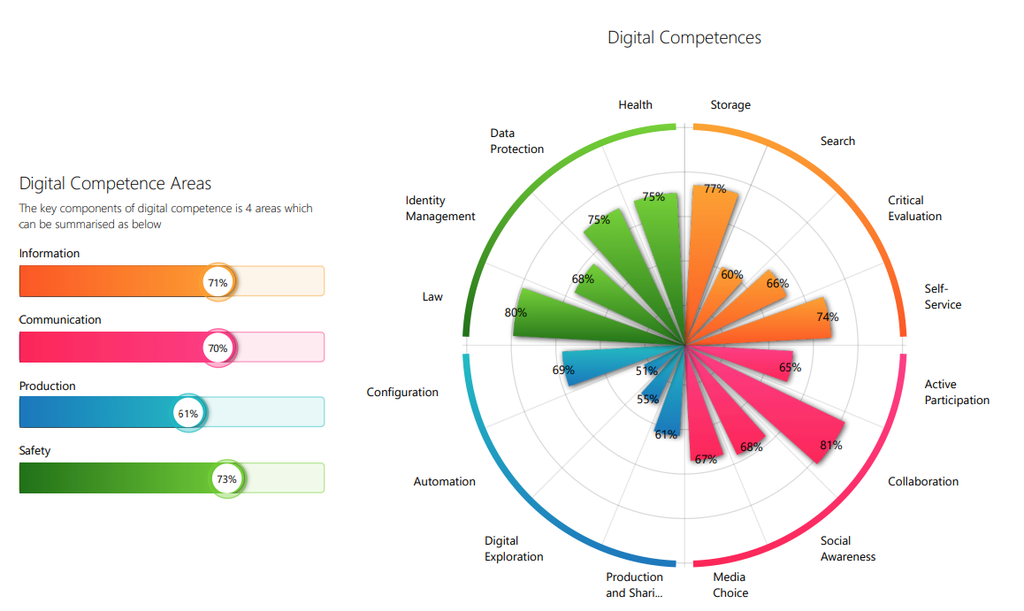
These areas are relevant to my Digital Health studies and future professional work. The assessment helped me understand my current strengths and recognise the skills I need to develop further. I learned that digital competence is not only about using technology but also about continuously improving my knowledge and using digital tools responsibly.
Reflection on Learning
This course gave me a broader understanding of how digitalisation affects not only technology but also people, organisations and everyday life. Before completing the activities, I mainly viewed digitalisation from a healthcare perspective. Through the different tasks, I became more aware of how digital services can influence communication, access to information, privacy, security and participation in society.
One of the most useful parts for me was connecting the topics to my own experience in healthcare and Digital Health. The activities helped me think about how technologies such as digital healthcare applications, artificial intelligence and online services can support people, while also creating challenges for those who may not have the same digital skills or access to technology.
The discussions about cyber security, GDPR and responsible use of information also made me think more carefully about the importance of protecting personal data. This is particularly relevant to healthcare because digital systems handle sensitive information that needs to be used responsibly.I also learned from reading and commenting on other students’ experiences. Their examples showed me that people’s needs and experiences with digital services can be very different depending on their age, location, profession and level of digital competence. This helped me look at digitization from perspectives other than my own.
The Digital Competence Test was also useful because it showed me both my strengths and areas where I can improve. My results encouraged me to continue developing my digital skills rather than assuming that being familiar with technology means having strong digital competence in every area.
This section of DIGI CITIZEN has encouraged me to approach digitization more critically and practically. As a Digital Health student, I want to continue developing my digital skills while keeping the needs, privacy and experiences of users in mind.