

Kela, OmaKanta and KEVA
At the moment, I’m not working, so I receive unemployment support from Kela. On top of that, my partner and I get housing support as a household. The amount we receive depends on our living expenses and whether we have any other sources of income or benefits. I also take daily medication, and Kela covers part of the cost for it.
A few years ago, I applied for the European Health Insurance Card, and the process was very smooth — I received the card by post without delay. Kela’s online services are user-friendly, and they’ve clearly tried to make the application steps as simple and straightforward as possible.
I use OmaKanta, which I log into through my online banking credentials (S bank). I usually check OmaKanta after I’ve had a medical appointment or some laboratory tests, just to see what the healthcare providers have written in the system. I also use it to renew my prescriptions.
I logged into Keva, but no information about me as I have never been working for the public sector. Although I have been working for several private companies in different fields. So I checked Työeläke.fi which direct me to elo.fi
the earliest time to get pension is at the age of 67years and 1 month, and the target would be at the age of 69years and 2 months so I would get better pension.
Service/Application from your own field.
A digital service that I find very important in the oral hygiene field in Finland is Apotti, an electronic client and patient record system used in many healthcare settings, especially in the Helsinki region. While I haven’t yet used it personally, I’ve learned about it during my studies, and it’s clear that Apotti plays a big role in the everyday work of oral hygienists.
What makes Apotti so valuable for oral health professionals is that it brings together all patient information in one place — including dental records, treatment plans, x-ray images, and appointment histories. This allows oral hygienists to see a complete picture of the patient’s oral health and plan care more accurately and efficiently. For example, if a patient has previously had gum disease or fluoride treatment, we can quickly access that information and continue the care without repeating unnecessary procedures.
Apotti also helps with clinical documentation, which is a big part of our job. We can enter notes during or after a visit, send referrals to dentists or other specialists, and follow up on treatments, all within the same system. This reduces paperwork and saves time — which means we can focus more on the patient.
Another great feature is integration with other healthcare services. Oral health is closely connected to overall health, so having a system that allows communication between general healthcare and dental care is a big advantage. For example, we might notice signs of diabetes in a patient’s mouth and be able to share that information with their doctor through Apotti, which supports better care for the whole person.
Apotti is also built to meet GDPR standards, which means sensitive patient data is protected. That’s very important in oral health work, where we handle personal health information every day. Knowing that the system is secure helps build trust between the oral hygienist and the patient.
Of course, learning to use Apotti can be challenging in the beginning. It’s a complex system and requires good training. But once mastered, it supports teamwork, improves communication, and makes oral health services more efficient and patient-friendly.
In summary, Apotti is not just a general healthcare tool — it directly supports the work of oral hygienists by offering smart, connected, and secure tools that make our job easier and more effective. It’s a great example of how digitalization is changing oral health care for the better.
The Digital Gap – Risks for People Who Don’t Use Online Services
As our society becomes more digital every day, many essential services—especially in the healthcare sector—are moving online. This shift brings convenience for many, but it also creates real challenges for people who don’t use the internet or don’t feel comfortable with technology.
For example, booking a doctor’s appointment, checking lab results, or renewing a prescription can now be done with just a few clicks. But what happens if someone doesn’t have a smartphone or computer? Or if they simply don’t know how to use digital services? These individuals may face long delays, confusion, and even missed opportunities to get the care they need. In serious cases, their health could suffer just because help didn’t reach them in time.
It’s not just about health, either. More and more services—like applying for social benefits or managing personal documents—are digital-first. If you’re not online, you may need to fill out paperwork by hand or wait longer for responses. It can feel frustrating, lonely, and even unfair.
There’s also a financial side to this issue. Online platforms often offer better prices, special deals, or faster service. People who don’t or can’t use digital tools might end up paying more or losing access to certain options altogether. This can widen the gap between different groups in society, especially affecting elderly people, immigrants, or those with limited education or income.
While digitalization has many benefits, we need to remember that not everyone is on the same path—or at the same pace. As a society, we should make sure that support is available for those who need help adapting. No one should be left behind just because they don’t live online.
Comments :
I made comments on the following blogs
1. https://blogi.savonia.fi/villejamia/digi-citizen/?unapproved=8&moderation-hash=8e9c70956d4407ccab02dbd2d7fa746a#comment-8
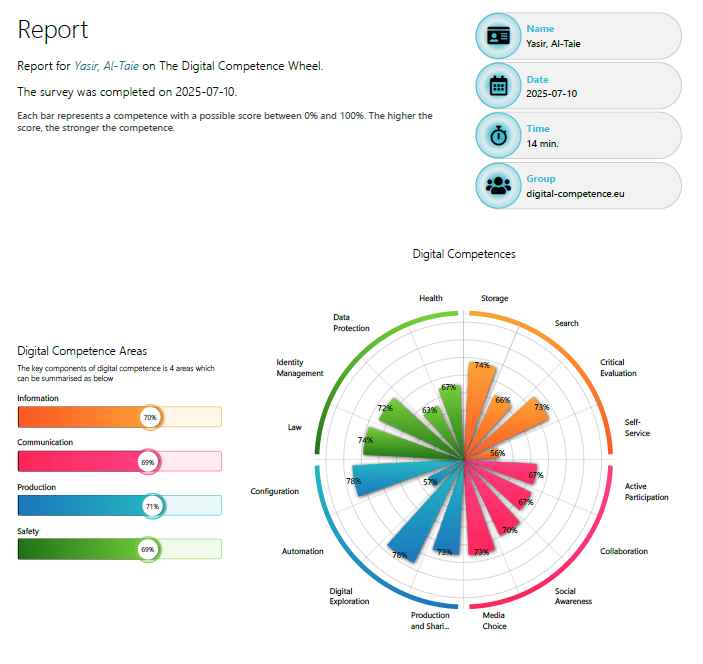
Overall, I consider my digital skills to be strong. I can easily search for information and assess its reliability. I’m comfortable using various digital services, whether it’s for online shopping, healthcare, or other everyday tasks. I also regularly use the computer and internet for entertainment purposes.
It was interesting and enjoyable to see which digital services and applications other students explored and how they reflected on their own digital skills. These assignments reminded me of how fortunate I am to have grown up in a time when digital tools became a natural part of life. Learning to use technology from an early age has made it much easier to adapt to new innovations and to navigate emerging digital services.
I found your description of Apotti really interesting, especially how it integrates dental care with general healthcare. I hadn’t realized how important that connection is, for example in spotting signs of diseases like diabetes. It’s great that you highlighted how the system can save time for professionals while also improving patient care.
Also your section on the digital gap was very thought-provoking. I liked how you pointed out not only the healthcare challenges but also the financial and social effects of being left out of digital services. It made me think about how easily digitalization can create inequality if proper support isn’t provided. I agree with you that society should make sure no one is left behind.
Your writing was smooth and pleasant to read.
I also have a European Health Insurance Card. It’s useful when traveling in Europe and you happen to get sick. With the card, you receive the same benefits as the citizens of that country. A new card is automatically sent by mail when the previous one expires.
You use online banking credentials to log in to OmaKanta. Have you considered using mobile authentication? Personally, I’ve found it easy and convenient to use for accessing all digital services. Nowadays, I only use my banking credentials to log in to my bank’s website. I feel this is a safer option.
It was interesting to read about the work of a dental hygienist and how digitalization has made the job easier. It allows more time for patients, and paperwork has been eliminated.
Your writing was fluent and pleasant to read.
I also have a European Health Insurance Card. It’s useful when traveling in Europe in case of illness. With the card, you receive the same benefits as citizens of the country you’re visiting. A new card is automatically sent by mail when the previous one expires.
You use your bank credentials to log in to OmaKanta. Have you considered using a mobile certificate? Personally, I’ve found it easy and convenient to use for accessing all digital services. Nowadays, I only use bank credentials to log in to my bank’s website. I feel this is a safer option.
It was interesting to read about the work of a dental hygienist and how digitalization has made the job easier. It allows more time for patients, and paperwork has been eliminated.
It was nice to read your text.
You described Kela`s services by family and you highlight the most common parts fo Kela. The elderly and the unemployed are dependent on Kela benefits.
You justify the necessary of European Health Insurance Card.
It is really important to healthcare that patient data is collected to Omakanta and it’s necessary to have patient`s permission to use this data when needed to make sure that treatment procedures will be done correctly and medication is been updated.
Keva`s information for pension accounts were not so good. Retirement age is quite high.
You shortly described Appotti services especially on dental healhtcare. It was nice to hear that the system is actually beneficial given thought it has been widely criticized.
Finally your comment that it has been lucky to be born in the midst of digitalization, is quite apt.
-Tiina Blek-
Hi Yasir,
Thank you for the clear and straight-to-the-point text. I especially appreciated your discussion of Apotti and how you connected it to your own field, as it shows good understanding of how digital systems support everyday healthcare work. You explained well why Apotti is valuable for professionals and patients, and your writing makes the topic easy to follow even for readers who are not familiar with healthcare IT systems.
However, there are a few points about Apotti that could be slightly misleading. As a nurse, I’d like to clarify that while Apotti is a unified electronic patient and client record system used in the Helsinki–Uusimaa region, it is not a general healthcare tool used by all organizations in the region. Not all healthcare providers in Uusimaa use Apotti, and patient information is only unified within the organizations that have adopted it (such as HUS, Helsinki, Vantaa, and Kerava). For example, if a patient is transferred between organizations using different systems (like Apotti and Lifecare), information may still be transferred on paper. I’m not saying your work is wrong, but a bit more elaboration on these differences would help avoid misunderstandings and make your explanation even more accurate.
Br,
Patricia Aghangu-Atem
Thank you Yasir for this interesting blog. The impact and your thoughts were very easy to follow and relate to. I never thought of how imprtant the harmomization of digitial health records are in the field of oral hygiene. I also love the background design you chose, it makes your blog unique.
Congratulations for the excellent digital skill test results!