
Have you ever gone to bed exhausted — only to find your mind still replying to emails, attending meetings, or planning tomorrow’s to-do list? What if the real reason why you struggle to sleep isn’t your evening routine, your screen time, or your pillow but the way your workday follows you home?
What if employers weren’t part of the problem but part of the solution?
Wellbeing starts long before we enter the workplace, and sleep is one of the strongest predictors of clarity, emotional balance, safety, and sustainable work ability. We all know how one bad night can turn a workday into survival mode. Yet many of us try to push through with caffeine or willpower. But what if the real answer isn’t another personal fix, but workplaces that support recovery from the start?
When employers treat rest and sleep as essential — honoring biological rhythms, protecting recovery time, and building a culture that values sleep — organizations don’t just improve wellbeing. By valuing rest and sleep employers unlock smarter, healthier, and more efficient workers.
When work is trying to be your “bed buddy”
Sleep happens during free time, so it is often treated as something employees should manage alone. But work strongly shapes how possible recovery really is. This is why sleep belongs not only in private life, but also in workplace well-being discussions. (Paajanen 2024.) Sleep problems affect millions worldwide, and the reasons are not always “bad habits” (Noura et al. 2024). Often the real challenge is that the body leaves the office, but the mind does not.
A longitudinal study showed that work-related stress harms sleep quality through rumination — constant worrying and overthinking during free time (Noura et al. 2024). On the positive side, being able to mentally detach from work improves mood and reduces exhaustion. Simply put: the less your brain works the night shift, the better you sleep. (Peng et al. 2023.)
Poor sleep doesn’t just make employees tired. It affects job satisfaction, emotions, and workplace relationships. Research shows that insomnia is linked to negative emotions, reduced attentiveness, and conflicts with colleagues or leaders. Good sleep, in contrast, supports engagement and overall satisfaction. (Peng et al. 2023.)
Sleep is also tied to occupational self-efficacy, the belief that you can handle work challenges. Higher self-efficacy supports coping and may buffer the negative effects of poor sleep. In other words: sleep support isn’t only about darkness and silence. It’s also about confidence, competence, and leadership that strengthens belief in one’s abilities. (Peng et al. 2023.)
“No amount of workouts, yoga, or green smoothies will help. The real problem is losing control of work.”
Eira Roos, occupational health physician (Valkama 2026)
What´s really broken – you or the system?
When work changed, our sleep changed with it. These days, many work schedules simply don’t line up with how our bodies are built to function. Night shifts, for example, mess with our circadian rhythm and increase the risk for several health problems (Di Milia & Bjorvatn, 2024). So, when people struggle to sleep, it’s often not a personal failure at all. It’s the structure around them.
Research keeps pointing out the same thing: not getting enough sleep chips away at our ability to work well. This hits “evening types” the hardest — the people who naturally feel more alert later in the day. They are more prone to exhaustion and burnout, especially in midlife between ages 45 and 54 (Fox et al., 2025; Merikanto & Partonen, 2024).
If sleep loss becomes chronic, the cost is not only personal. It becomes organizational.
“If we assume that everyone is efficient and alert right from the early morning, that simply isn’t true. A large share of people are evening types, and many more are at their best in the afternoon. Allowing more flexibility in working hours helps.”
Mona Moisala, Doctor of Psychology and expert in brain wellbeing (Valkama 2025)
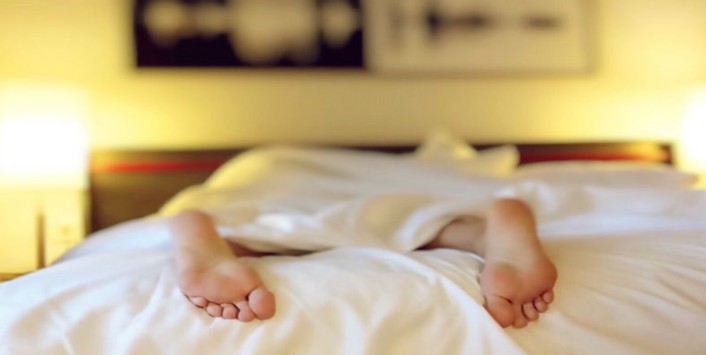
Sleep isn’t only pretty… it’s superpower!
Sleep supports alertness, energy, emotional regulation, and memory. During sleep, the brain restores itself, processes emotions, consolidates memory, and activates its “cleaning system”. (Paajanen 2024.) You are not “switching off.” You are undergoing nightly maintenance.
Good sleep increases motivation and productivity (Finnish Institute of Occupational Health n.d.). Sleep hygiene refers to routines that support sleep: regular habits, a calming environment, and reducing disturbing factors (Finnish Institute of Occupational Health 2016).
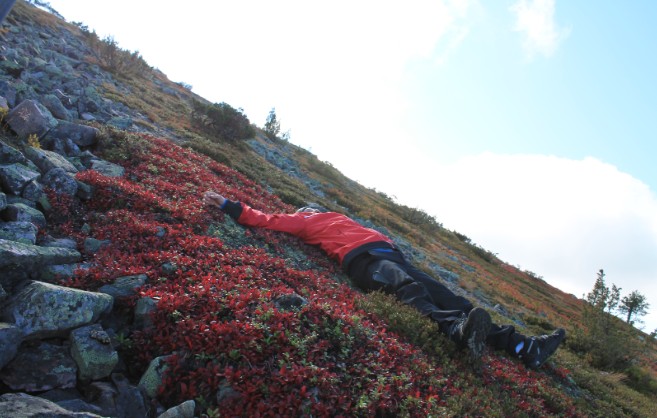
Let them sleep or pay the price
Workplace sleep programs actually work. When workplaces offer sleep education, stress‑management tools or relaxation practices, people sleep better: less insomnia, better quality, and even reduced anxiety and bullying (Rodríguez‑Muñoz et al. 2025). The same goes for safer work environments and supervisors who support healthy sleep; both are linked to better sleep outcomes (Brossoit et al. 2023).
Research consistently shows that sleep depends on more than bedtime routines. Workload, schedules, leadership, flexibility, and a recovery-friendly culture all shape how well employees truly rest (Peng et al. 2023; Brossoit et al. 2023).
Teemu Paajanen, a senior psychologist at Finnish Institute of Occupational Health, highlights practical actions such as reasonable workloads, encouraging breaks, flexible hours, assessing work hour strain, allowing shift influence, having open conversations about sleep, and referring employees to occupational health when needed (Paajanen 2024).
And here’s the striking part: in a U.S. study, employees slept better when they got more control over their schedules and when managers were trained in family‑supportive leadership (Olson et al. 2015). The result? About eight extra minutes of sleep per night and fewer sleep problems. Eight minutes sounds tiny. But across months and whole organizations, it becomes a real, measurable shift in wellbeing.
“Even if you train for a marathon or a triathlon, it won’t boost your organization’s work ability. Work gets done together.”
Eira Roos, occupational health physician (Valkama 2026)
Rested workers thrive!
Sleep is not only an individual’s responsibility, but workplaces can also strengthen it through structure and leadership. Well-rested employees feel more energetic, dedicated, and enthusiastic at work (Schleupner & Kühnel 2021). Maybe the real question isn’t whether employers can influence sleep. Maybe the question is: if we already know they can — why aren’t we designing work with sleep in mind?
“It’s about looking after employees’ health and wellbeing. Good sleep helps the brain work better and makes work smoother and more productive. If I were an employer, I’d think about how to support my employees’ sleep and alertness, no matter the industry or working hours.”
Teemu Paajanen, a senior psychologist at Finnish Institute of Occupational Health (Paajanen 2024)
So, the shocking link between your boss and your bedtime is simple: when sleep works, work works. Perhaps the next competitive advantage isn’t longer hours, but better nights. Because when workplaces back good sleep, magic happens. The fun kind 😉
Writers
Edgren Eveliina, Niemi Vera, Svahn Miira, Savolainen Anniina, Viljamäki Sini, Students of Welfare and Health Coordinator Master’s Degree Programme at Savonia University of Applied Sciences
Pehkonen Pirjo, Peteri Juha and Savela Sanna. Lecturers at Savonia University of Applied Sciences
Sources
Microsoft Copilot 2026. An AI based writing and translation assistant. Used for checking language quality, clarifying structure, and generating headline ideas, March 2026. https://copilot.microsoft.com
Already exhausted and the workday hasn’t even started. 2017. Picture. Pxhere. https://pxhere.com/fi/photos?q=sleeping&search=. Accessed 12.1.2026.
Brossoit, R., Hammer, L., Crain, T., Leslie, J., Bodner, T. & Brockwood, K. 2023. The Effects of a Total Worker Health® Intervention on Workplace Safety: Mediating Effects of Sleep and Supervisor Support for Sleep. Occup Health Psychol. 28(4):263–276. https://stacks.cdc.gov/view/cdc/133844. Accessed 21.1.2026.
Di Milia, L. & Bjorvatn, B. 2024. The relationship between shift work, sleep, and work hours on wellbeing. Industrial Health. (63) 148–155. https://www.jstage.jst.go.jp/article/indhealth/63/2/63_2024-0088/_pdf/-char/en. Accessed 9.1.2026.
Finnish Institute of Occupational Health n.d. Uni ja palautuminen. Työhyvinvointi ja työkyky. Internet publication. https://www.ttl.fi/teemat/tyohyvinvointi-ja-tyokyky/elintavat/uni-ja-palautuminen. Accessed 16.1.2026.
Finnish Institute of Occupational Health 2016. Unen huolto. Vireyttä vuorotyöhön. Learning materials. Internet publication. https://www.ttl.fi/oppimateriaalit/vireytta-vuorotyohon/unen-huolto. Accessed 19.1.2026.
Fox, J., McGrail, M., Jin Cha, Y., Cho, D., Weimeng Lu, R., Yi, R. & Martin, P. 2025. A Mixed-methods Systematic Review of Sleep Duration and Quality in Healthcare Workers: Impacts on Patient Safety and Quality of Care. Behavioral Sleep Medicine. Vol 23 (5), 698–714. https://www.tandfonline.com/doi/pdf/10.1080/15402002.2025.2522682. Accessed 9.1.2026.
Merikanto, I. & Partonen, T. 2024. Eveningness increases risks for depressive and anxiety symptoms and hospital treatments mediated by insufficient sleep in a population-based study of 18,039 adults. Depression and Anxiety, 38, 1066–1077. https://onlinelibrary.wiley.com/doi/10.1002/da.23189. Accessed 11.1.2026.
Niemi, V. 2015. Sometimes the most productive thing you can do is lie down and let the world hold you. Picture. 14.9.2015. Location: Pelkosenniemi. Collections of Vera Niemi.
Noura, M., Mauczok, C., Eder, J., Wekenborg, M. K., Penz, M., Walther, A., Kirschbaum, C., Specht, M. B. & Rothe, N. 2024. Work-related stress and sleep quality. The mediating role of rumination: a longitudinal analysis. Somnologie. Volume 30, pages 32–42. https://doi.org/10.1007/s11818-024-00481-4. Accessed 9.1.2026.
Olson, R., Crain, T. L., Bodner, T. E., King, R., Hammer, L. B., Klein, L. C., Erickson, L., Moen, P., Berkman, L. F. & Buxton, O. M. 2015. A workplace intervention improves sleep: Results from the randomized controlled Work, Family, and Health Study. Sleep Health 1, 55–65. https://stacks.cdc.gov/view/cdc/203024. Accessed 9.1.2026.
Paajanen, T. 2024. Tue työntekijöiden unta ja vireyttä – 10 vinkkiä työnantajalle. Finnish Institute of Occupational Health. News article 16.4.2024. https://www.ttl.fi/ajankohtaista/uutinen/tue-tyontekijoiden-unta-ja-vireytta-10-vinkkia-tyonantajalle. Accessed 16.1.2026.
Peng, J., Zhang, J., Wang, B., He, Y., Lin, Q., Fang, P. & Wu, S. 2023. The relationship between sleep quality and occupational well-being in employees: The mediating role of occupational self-efficacy. Frontiers in Psychology, Vol 14. https://doi.org/10.3389/fpsyg.2023.1071232. Accessed 9.1.2026.
Rodríguez-Muñoz, A., Antino, M., Díaz-Guerra, A. & Sepúlveda Paez, G. 2025. The Impact of a Workplace Sleep Program on Employee Well-being: A Pre-post Design Intervention Study. Journal of Work and Organizational Psychology 41(2), 85–92. https://journals.copmadrid.org/jwop/art/jwop2025a9. Accessed 21.1.2026.
Schleupner, R. & Kühnel, J. 2021. Fueling Work Engagement: The Role of Sleep, Health, and Overtime. Frontiers in Public Health 9. https://www.frontiersin.org/journals/public-health/articles/10.3389/fpubh.2021.592850/full. Accessed 21.1.2026.
Valkama, H. 2025. Nykypäivän työelämä on uuvuttavaa ja tehotonta, sanoo tutkija – työssä keskitytään huonosti ja vääriin asioihin. YLE. Internet publication. https://yle.fi/a/74-20134227. Accessed 3.3.2026.
Valkama, H. 2026. Työterveyslääkäri: Työhyvinvointipäivät, liikuntaedut ja työsuhdepyörät pitäisi räjäyttää ja keskittyä olennaiseen. YLE. Internet publication. https://yle.fi/a/74-20208542. Accessed 4.3.2026.