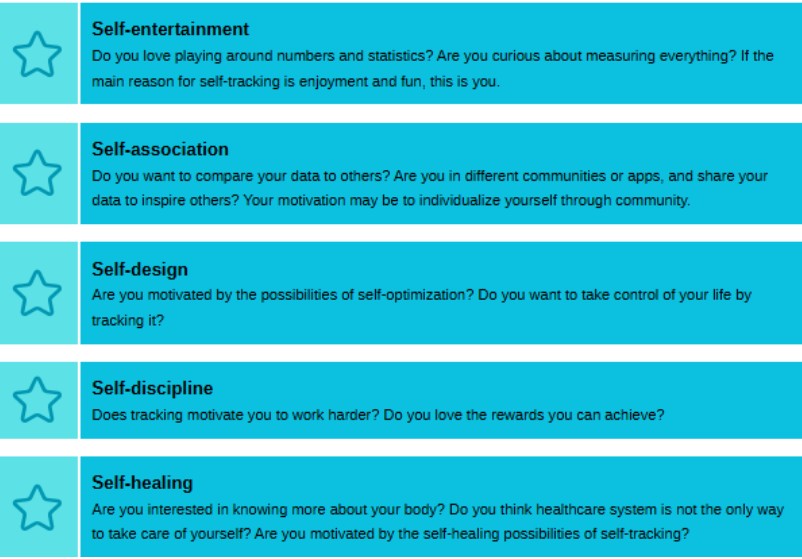
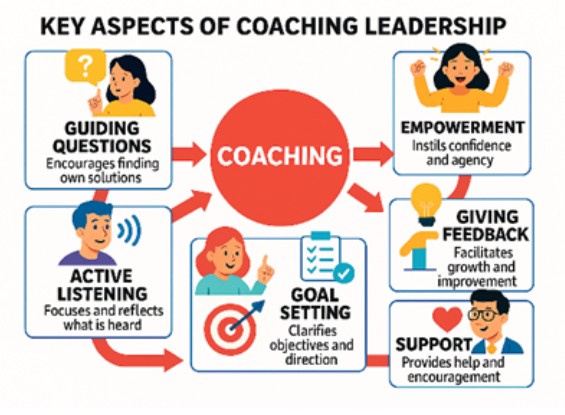
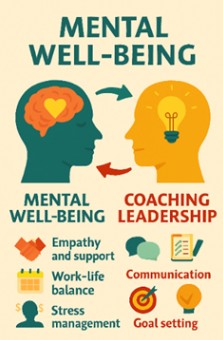
What did you eat today and why? Did you eat oatmeal with blueberries for breakfast or bacon and eggs? Was your lunch a salad or was it delivered food from McDonald’s? Was it because you felt like it or was it because it has been said that oatmeal and salad is a healthy choice? What or rather who guides our food choices and what really is a healthy or bad choice when it comes to food?
Maybe you have noticed yourself picking food that isn’t exactly what you crave, but it feels healthy and in line with national nutritional recommendations. Or you pick the food you crave and forget the healthiness and recommendations. That’s when the question arises: are you making the choice or are nutritional recommendations, culture and your environment making it for you?
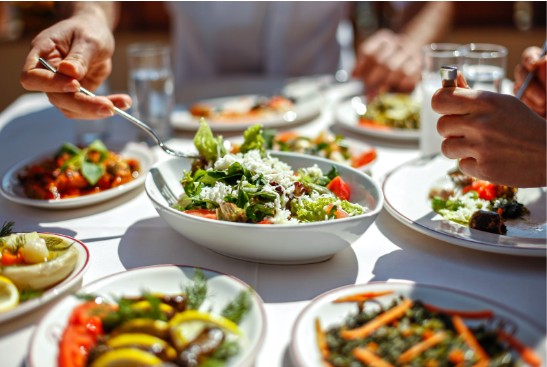
Do you know how your food choices are shaped?
Food is far more than nourishment – it is part of our everyday life, health, culture, and celebration. Through food we learn habits, build identity, and express creativity. Food choices change over the course of a person’s life and are influenced by many factors, such as the environment, life situation, and personal preferences. Although people have information about healthy eating, choices are often guided by taste. These choices are also influenced by nutritional recommendations, which aim to guide the population towards healthier and more balanced eating habits. (Kourouniotis ym. 2016.)
Let’s go back in time a little bit. Nutritional recommendations have always reflected the realities of their time. When updated, they consider dietary diversification, current trends, and each country’s cultural context. Finland’s first food circle was adopted from the United States in 1950, introducing foods that were previously unfamiliar in Finland. Since then, Finnish nutritional guidelines have increasingly focused on foods that align with Finnish eating habits and commonly used products. (Toivonen 2019.)
Today, nutritional recommendations are compiled based on various scientific studies and by many experts in nutrition, health, ecological sustainability, food services, educational sciences, and experts from other fields. The recommendations form a whole that considers health, the environment, and everyday practices. (THL 2024.) Or at least that’s what they say.
Do you know what’s behind the nutritional recommendations you follow? – Finland vs. USA
You might imagine that nutritional recommendations are simply presented by scientists. But did you know that they are also shaped by economic interests, political decisions, and cultural values? Although nutritional recommendations are presented as scientific, they are never shaped by science alone. (Mozaffarian et al 2018.)
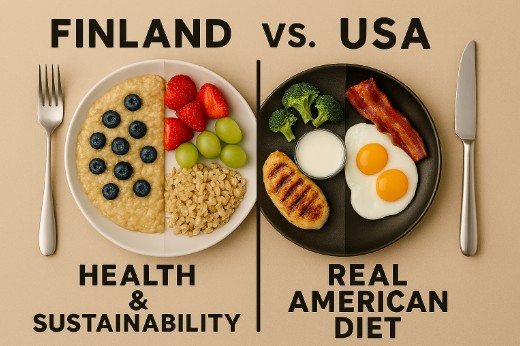
Let’s compare the food recommendations of Finland and the USA. In the United States of America nutritional recommendations have recently drawn major media attention and sparked debate about whose interests they serve, making the U.S. a timely comparison for Finland.
“We are putting real food back at the center of the American diet. Real food that nourishes the body. Real food that restores health. Real food that fuels energy and encourages movement and exercise. Real food that builds strength” (Dietary guidelines for Americans, 2026).
For example, in the United States, beef and dairy producers are influential political actors. This is reflected in how strongly meat and full fat dairy products continue to be emphasized as part of the “real American diet.” (Keevican 2026.) Meanwhile in Finland, political influences appear primarily through the integration of sustainability perspectives into the recommendations. Mitigating climate change and promoting a plant-based diet have risen alongside health as key priorities. (Sarlio 2019, 318.)
As Ursula Schwab, Professor of Nutritional Therapy at the University of Eastern Finland, says: “What is good for the environment is largely also good for health” (Toivonen 2019).
In Finland, the guiding influence comes strongly from health policy and environmental sustainability, whereas in the United States, public agricultural subsidies and influence from the food industry also play a significant role. (Valtion ravitsemusneuvottelukunta 2024; O’Neil Hayes & Kerska 2021).
In Finland, healthier eating is also promoted through measures such as confectionery and sugar taxes, as well as initiatives aimed at shaping the food environment to make healthy choices easier. Finland’s Nutrition Commitment model further encourages companies and organizations to support better eating habits. However, relying on voluntary participation can be challenging, as commercial interests may conflict with public health goals (Sarlio 2019.)
Let’s also think about this through economic policy: Studies show that healthier food is up to $550 more expensive per year than unhealthier options in the USA. Worldwide, 2.8 billion people are unable to live according to a healthy diet, and this number is growing. Healthier foods such as vegetables and fruits are more expensive to produce, transport and store. (Frost & Sullivan Institute 2025.) According to statistics, food in Finland is generally about 10% more expensive than the EU average (Tilastokeskus 2025).
So nutritional recommendations, economics, and politics meet in everyday life. Let’s look at this with an example: You are standing in front of the milk shelf in a Finnish grocery store, deciding whether to choose an oat drink or regular milk. The packages talk about climate impact, protein content, and heart health. But in the end, you pick one on sale. What do you think: do prices or environmental considerations affect your eating habits?
Your plate, your choice
Sometimes it feels like nutritional recommendations are constantly changing. First, fat is considered harmful, then sugar, then carbohydrates. Are these recommendations really based on science, or are they shaped by political decisions? However, the increasing amount of research continually brings new understanding about nutrition and its effects on health.
Let’s return to the question from the beginning: what did you eat today – and why? Our food choices happen in daily life, but they are never just individual decisions. Behind them lie nutritional recommendations, culture, the economy, and politics, often unnoticed.
The purpose of this knowledge is not to make us feel guilty, but to help us understand. By recognizing how and why guidelines are created, we can approach them more consciously and apply them in ways that make sense for our own lives.
When the USA released new nutritional recommendations, the question came to mind: whose recommendations should we follow? Should we put real food, real meat on our plates, or should we think more about nature?
Maybe the most important thing isn’t to ask whether nutritional recommendations are “right” or “wrong”. What matters more is how we interpret them. When we understand that guidelines are shaped at the intersection of science, politics, and culture, we can use them wisely as a helpful guide in everyday life, not as an absolute truth. Truth is, we are influenced by our environment and nutritional guidelines, but in the end, it’s your choice what you put on your plate.
Writers
Helkiö Tiina, Hyytiäinen Jenni, Lappi Heidi, Karttunen Saija and Nousiainen Sari. Students of Welfare and Health Coordinator Master’s Degree Programme at Savonia University of Applied Sciences.
Peteri Juha and Savela Sanna. Lecturers at Savonia University of Applied Sciences.
Sources
Microsoft 365 Copilot AI. Accessed to create a picture, March 2026. https://m365.cloud.microsoft/chat
Dietary guidelines for Americans. 2026. Dietary Guidelines for Americans,
2025–2030. Internet publication https://cdn.realfood.gov/DGA.pdf. Accessed 8.2.2026.
Frost & Sullivan Institute 2025. When cheap costs more: The Hidden Cycle of Junk Food, Health, and Inequality. Internet publication. https://frostandsullivaninstitute.org/wp-content/uploads/2025/09/When-Cheap-Costs-More-The-Hidden-Cycle-of-Junk-Food-Health-and-Inequality.pdf. Accessed 30.1.2026.
Keevican, M. 2026. New Dietary Guidelines Were Written by Authors with Strong Ties to the Food Industry, Doctors Report. Internet publication. https://www.pcrm.org/news/news-releases/new-dietary-guidelines-were-written-authors-strong-ties-food-industry-doctors. Accessed 3.2.2026.
Kourouniotis, S., Keast, R.S.J., Riddell, L.J., Lacy, K., Thorbe, M.G. & Cicerale, S. The importance of taste on dietary choice, behaviour and intake in a group of young adults. Appetite, 103, 1-7. https://www.sciencedirect.com/science/article/abs/pii/S0195666316301040 Accessed 17.1.2026
Mozaffarian, D., Angell, S.Y., Lang, T & Riviera, J.A. 2018. Role of government policy in nutrition-barriers to and opportunities for healthier eating. Internet publication. https://www.bmj.com/content/361/bmj.k2426.long. Accessed 8.2.2026.
O’Neill Hayes, T. & Kerska, K. 2021 PRIMER: Agriculture Subsidies and Their Influence on the Composition of U.S. Food Supply and Consumption. Internet publication. https://www.americanactionforum.org/research/primer-agriculture-subsidies-and-their-influence-on-the-composition-of-u-s-food-supply-and-consumption. Accessed 8.2.2026
Sarlio, S. 2019. Kestävää kehitystä ja terveyttä edistävä ravitsemus- ja ruokapolitiikka. Sosiaalilääketieteellinen aikakausilehti 56, 318–326. https://journal.fi/sla/article/view/83340/47111. Accessed 8.2.2026.
THL 2024. Miten ravitsemussuositukset syntyvät? Finnish institute for Health and Welfare. Internet publication. https://thl.fi/aiheet/elintavat-ja-ravitsemus/ravitsemus/ravitsemussuositukset/miten-ravitsemussuositukset-syntyvat-. Accessed 16.1.2026
Tilastokeskus 2025. Ruoka ja alkoholittomat juomat olivat Suomessa 10 % EU:n keskitasoa kalliimpia vuonna 2024. Internet publication. https://stat.fi/fi/julkaisu/cm1j7y3q42x3807uqrr2153d8. Accessed 22.3.2026.
Toivonen, J. 2019. Ravintotieteilijät raapivat päätään, kun kansa syö mitä haluaa – mutta parannamme koko ajan, ja 2020-luvulla DASH:in pitäisi kuulua kaikkien arkeen. YLE article. Internet publication. https://yle.fi/a/3-10730414 Accessed 8.2.2026
Valtion ravitsemusneuvottelukunta. 2024. Kestävää terveytä ruoasta-kansalliset ravitsemussuositukset 2024. Internet publication. https://www.julkari.fi/server/api/core/bitstreams/f42bb83b-9fc9-4146-8a5f-d2b6fba56a24/content. Accessed 8.2.2026.